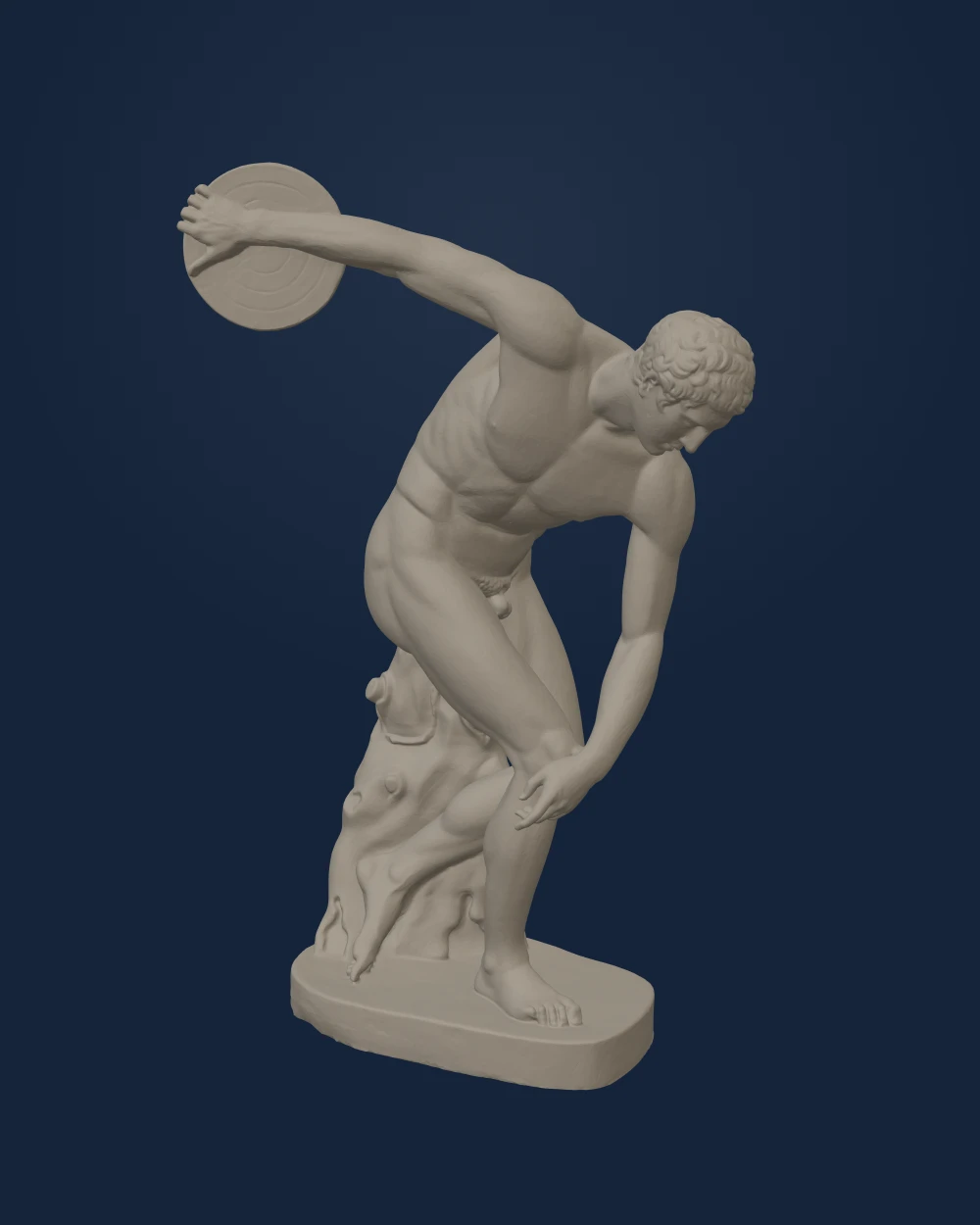
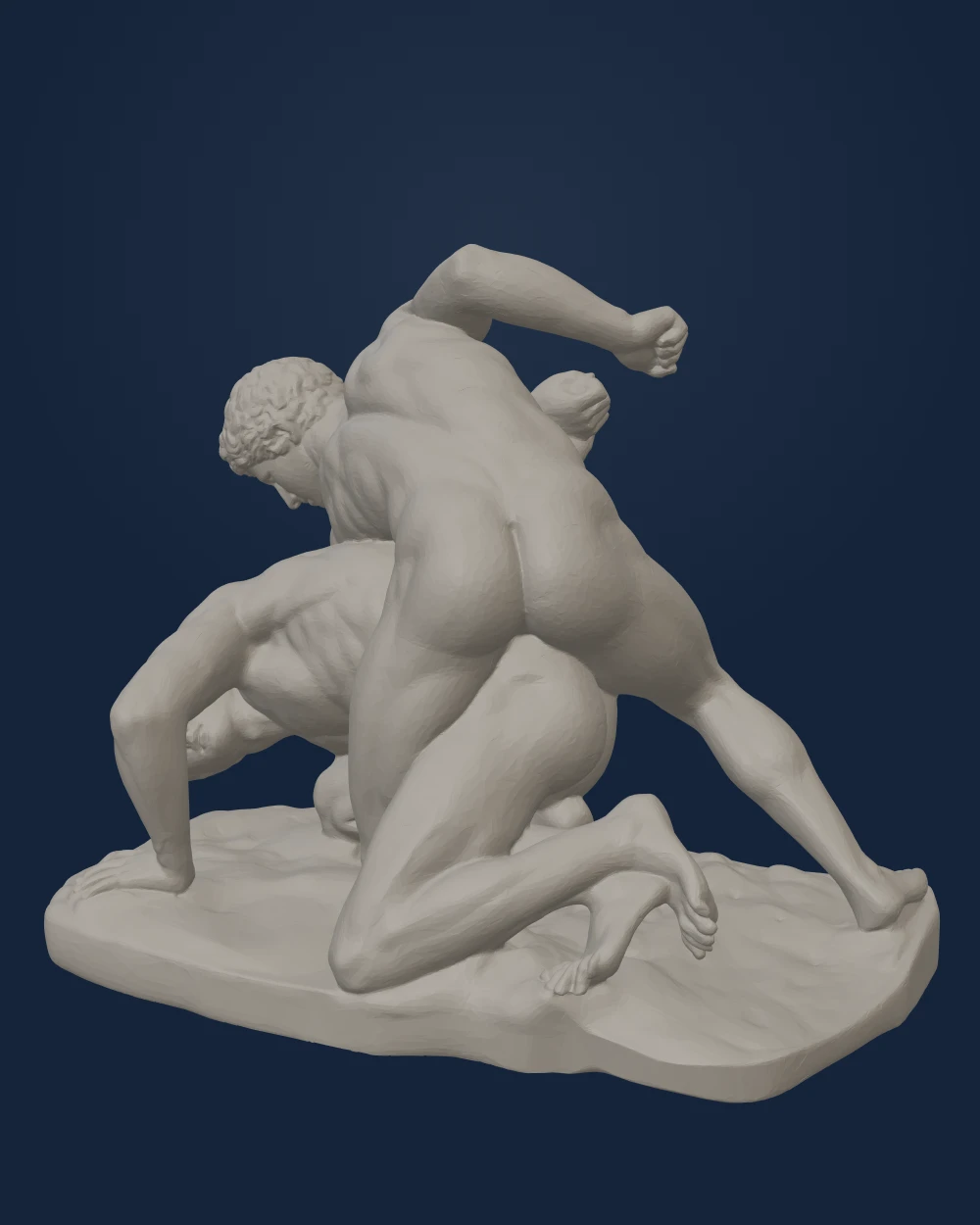
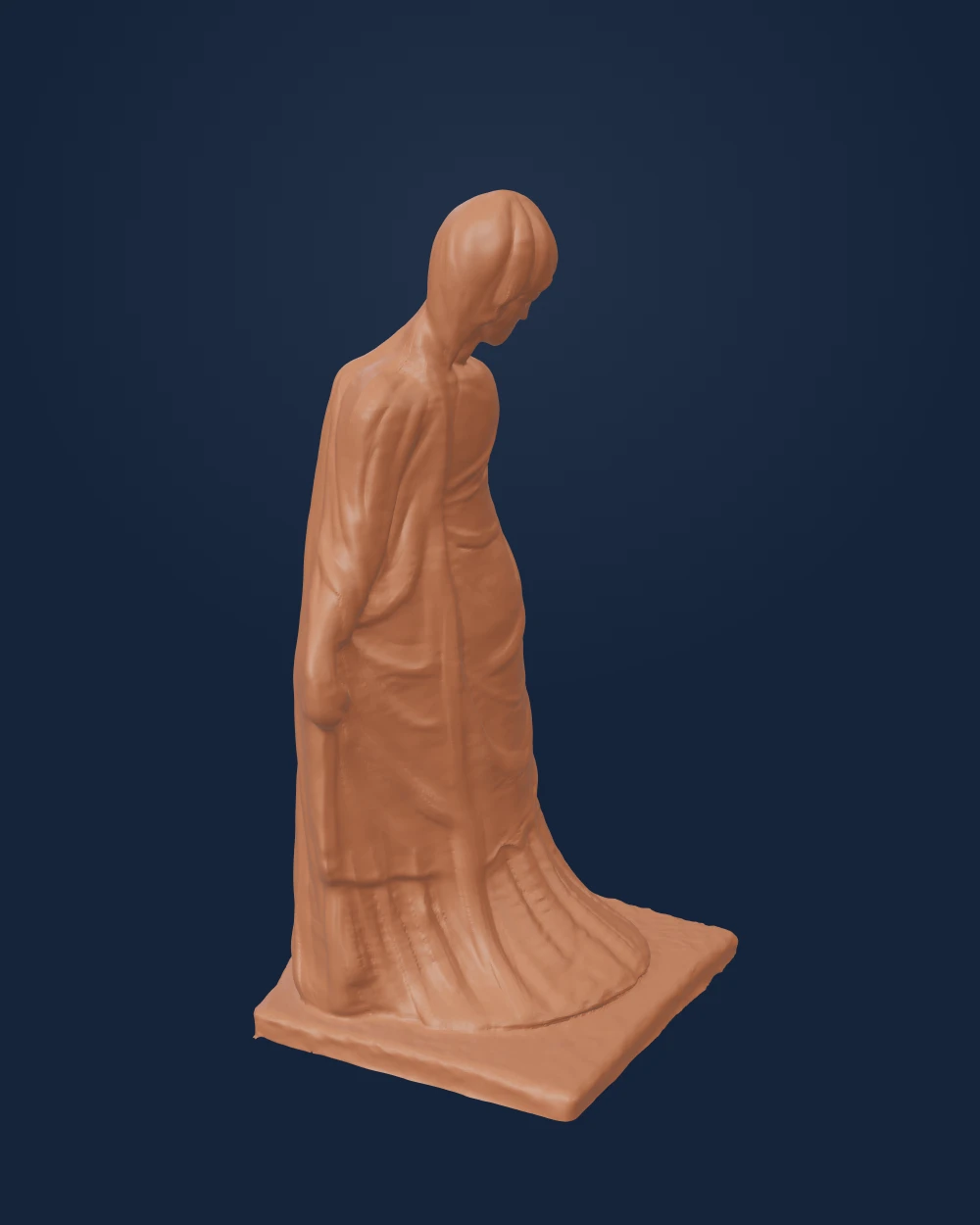
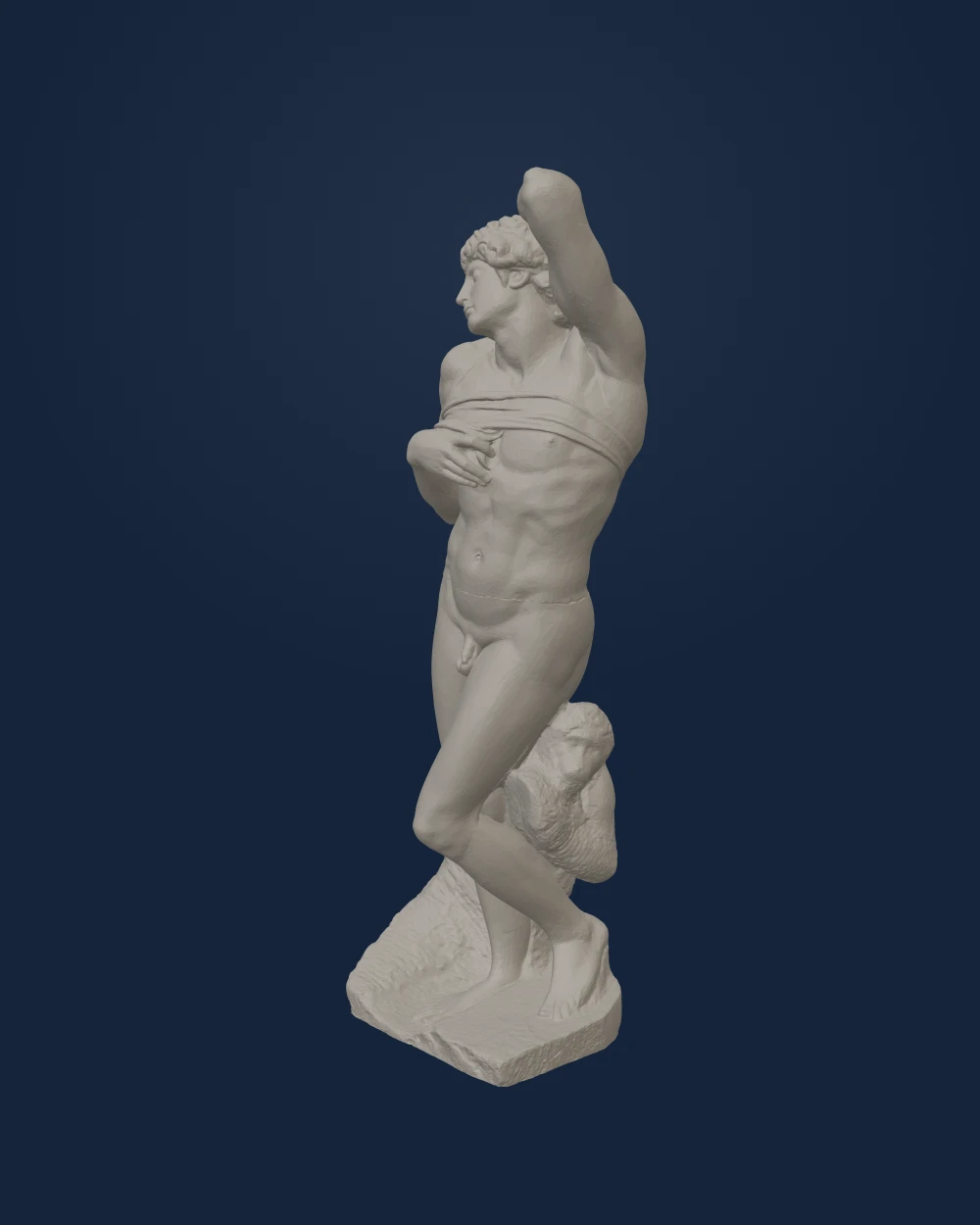
Each work represents a selected moment: a throw, a fall, a step, a struggle, or a turn. Compare how balance, support, and the direction of the body make movement legible from different viewpoints.
01
Discobolus
Myron · 460–450 BCE · Bronze (lost original)
The original bronze is lost; this version preserves the spiral composition from the trailing toes through the twisted torso to the raised disc. The head is a modern restoration, which affects how the figure is read in the round.
The two wrestlers are carved as an interlocked marble group. From a low viewpoint, the lower figure’s arm can be seen behind his back and the points of contact—knee, hip, and grip—show how weight is distributed.
This small fired-clay dancer is held in the Saint-Raymond reserves and is usually not on public display. The statuette uses the angle of the body and drapery to suggest a step.
Carved for the tomb of Julius II, this figure has only lightly indicated bonds: a thin band across the chest and one arm folded overhead. The pose combines the conventions of captivity, sleep, and release.
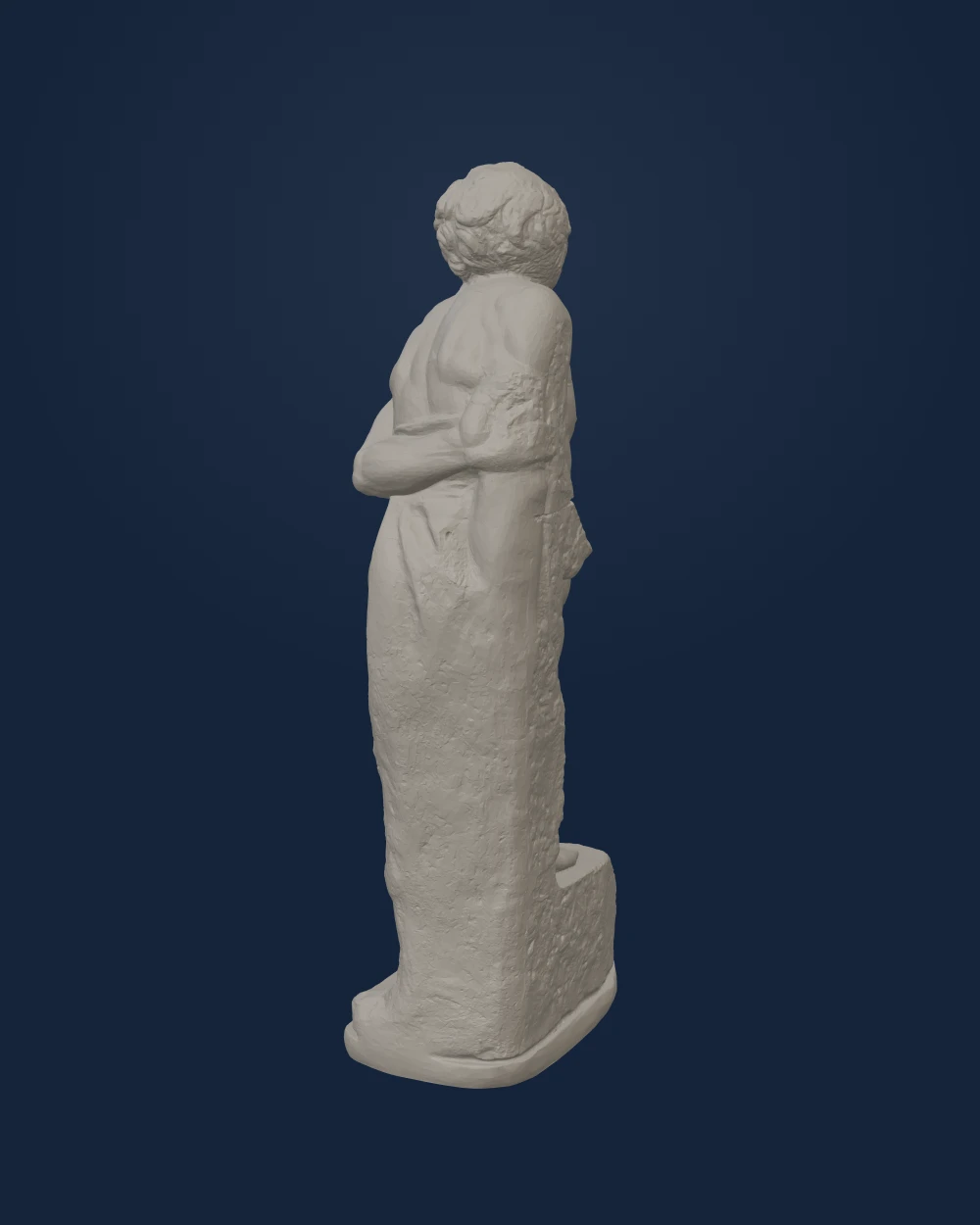
This companion figure has arms bound behind the back, a twisted torso, and a turned head. The plaster cast records the worked surface of the marble; low-angle light makes tool marks more apparent.
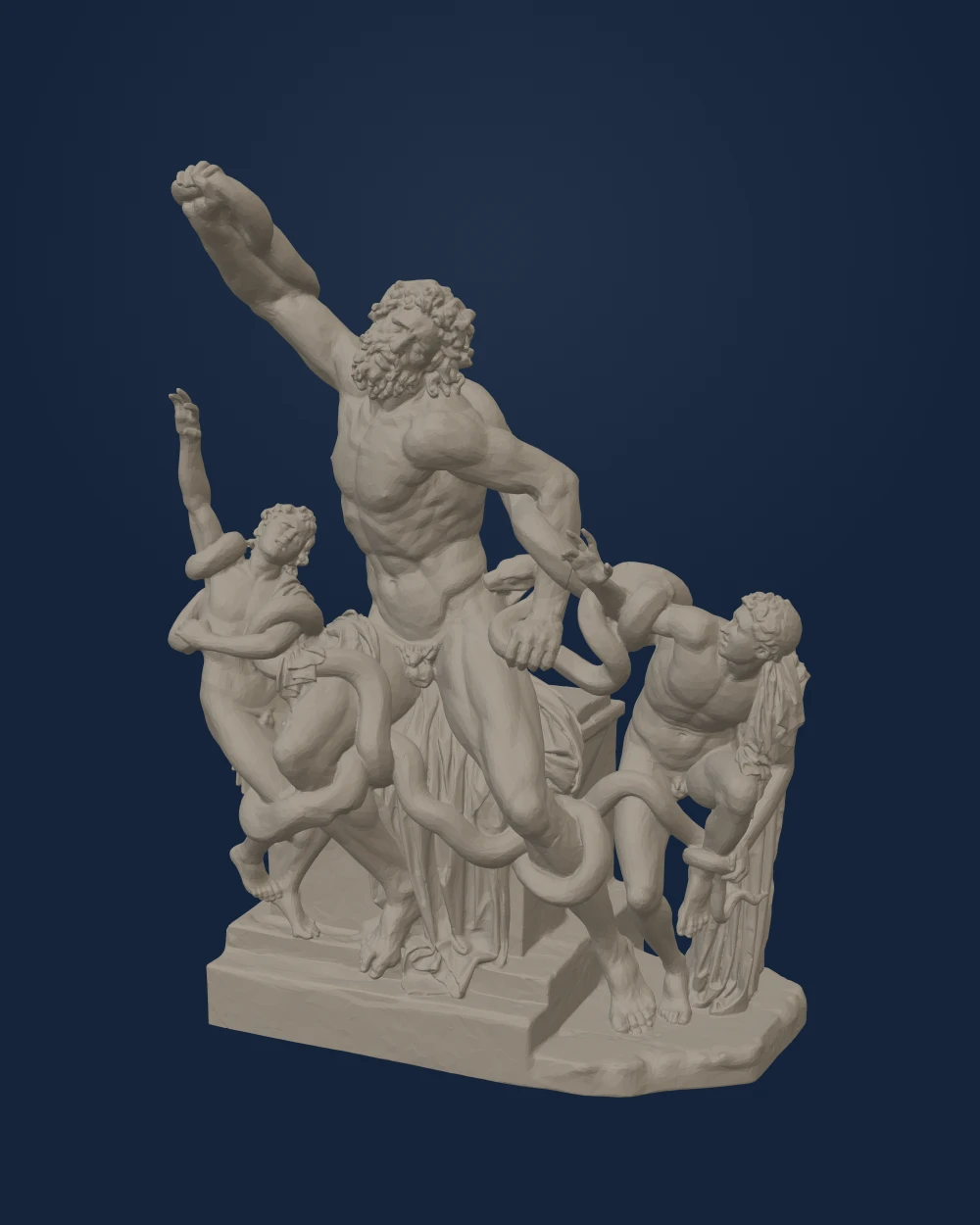
Agesander of Rhodes, Athanadoros and Polydoros · c. 40-20 BCE · Marble
Laocoön and his sons are arranged on a rising diagonal, with the serpents linking all three bodies. Viewing from the side or back helps trace how each coil connects the group.
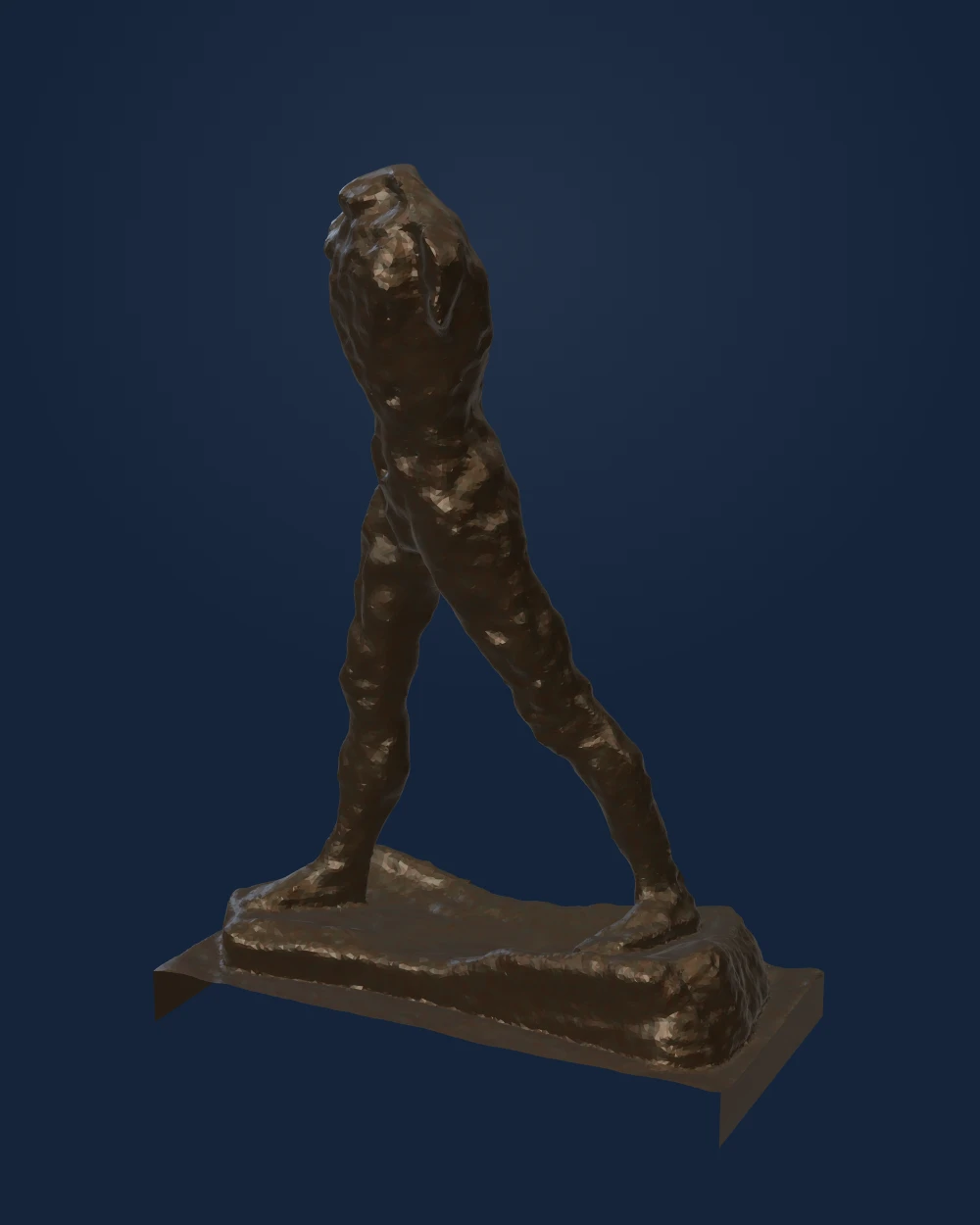
Rodin retained the torso and legs while omitting head and arms. Both feet rest flat on the ground, so the sense of walking is constructed from the pose rather than observed from a natural stride.
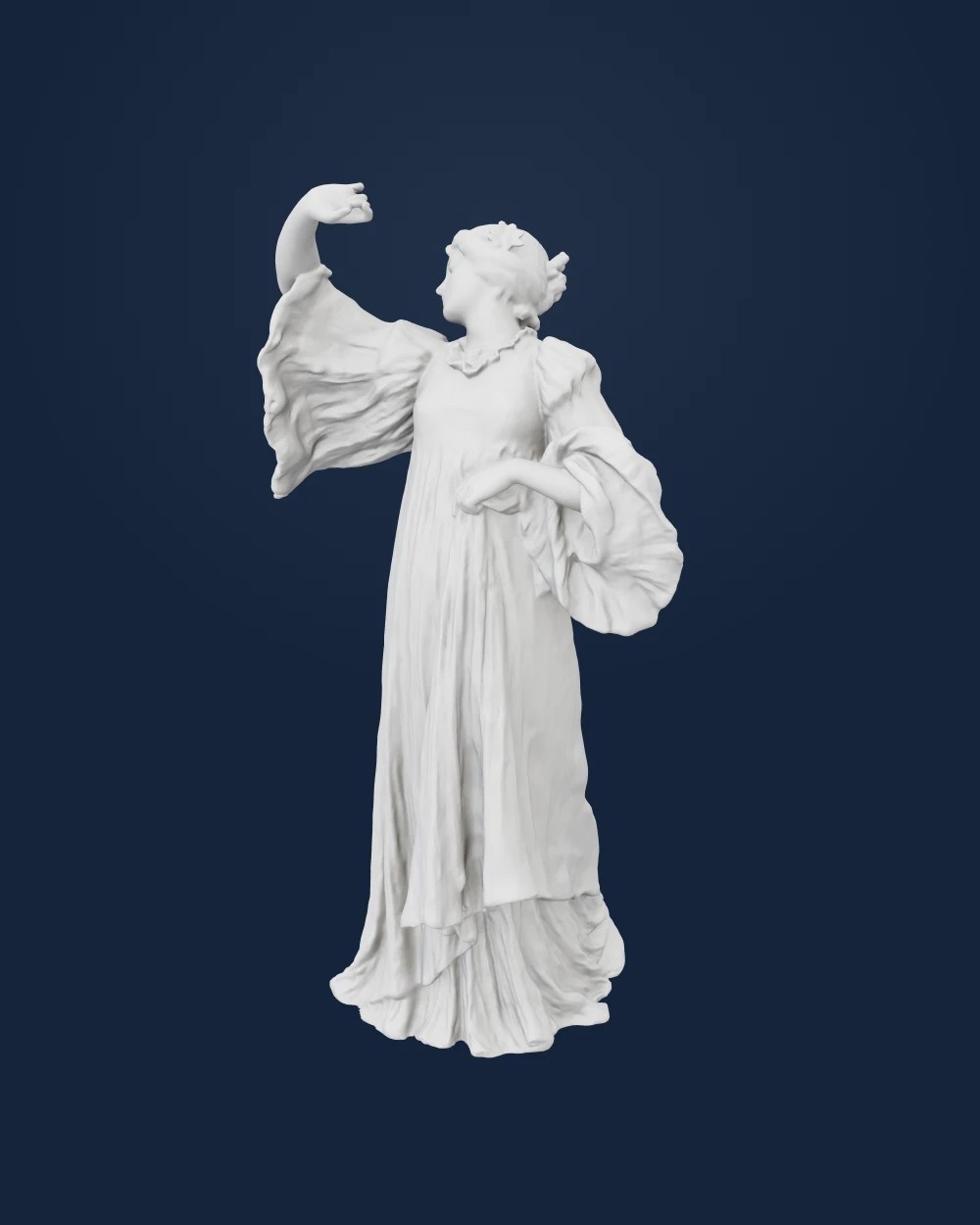
This figure comes from Le Jeu de l’écharpe, a Sèvres table centerpiece designed for viewing in the round. Unglazed biscuit porcelain keeps the surface matte, while the scarf establishes the direction of movement.
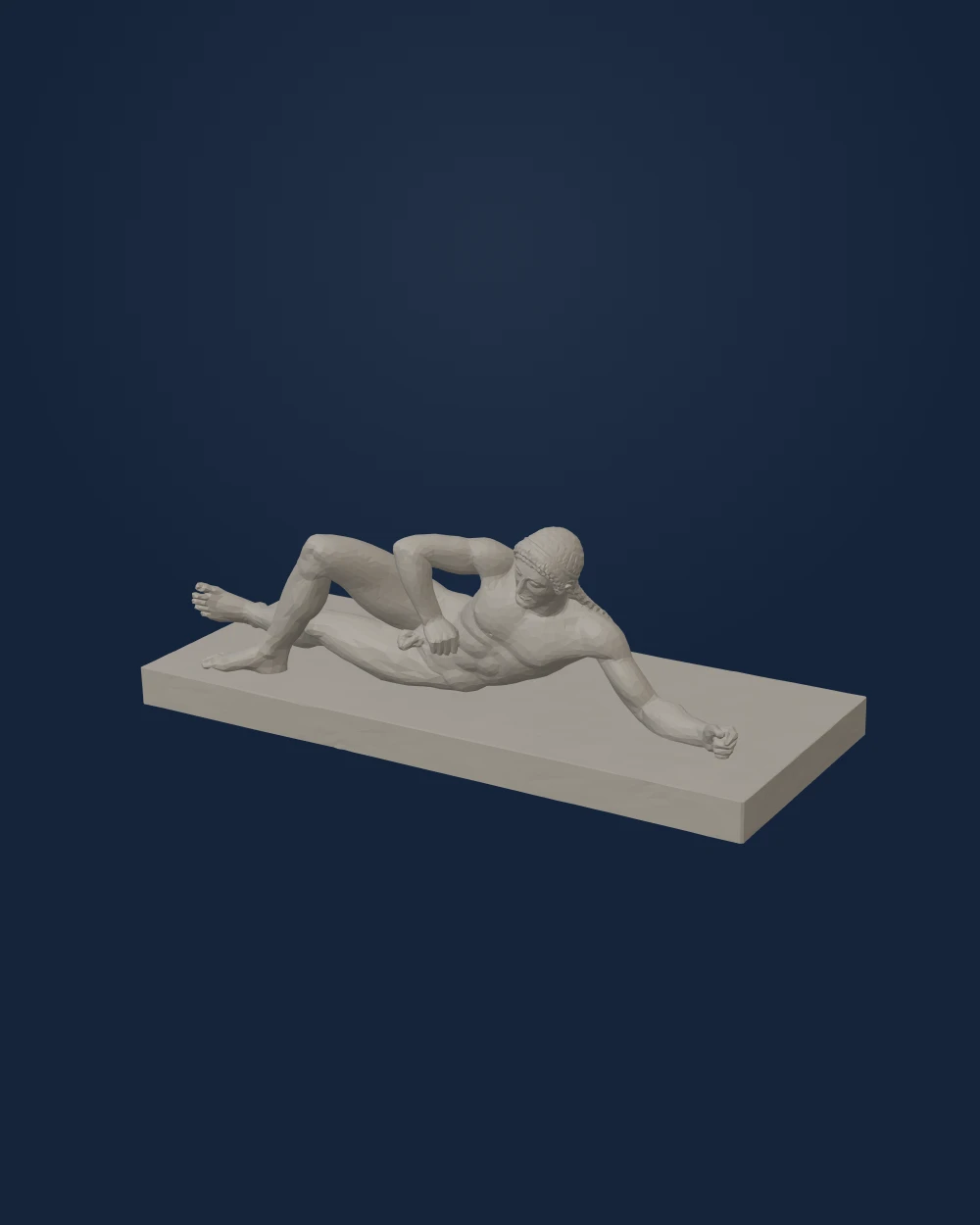
This warrior was designed for the tapering corner of the Aphaia temple’s west pediment. The figure’s propped elbow and extended legs fit the triangular architectural space and were intended to be seen from below.
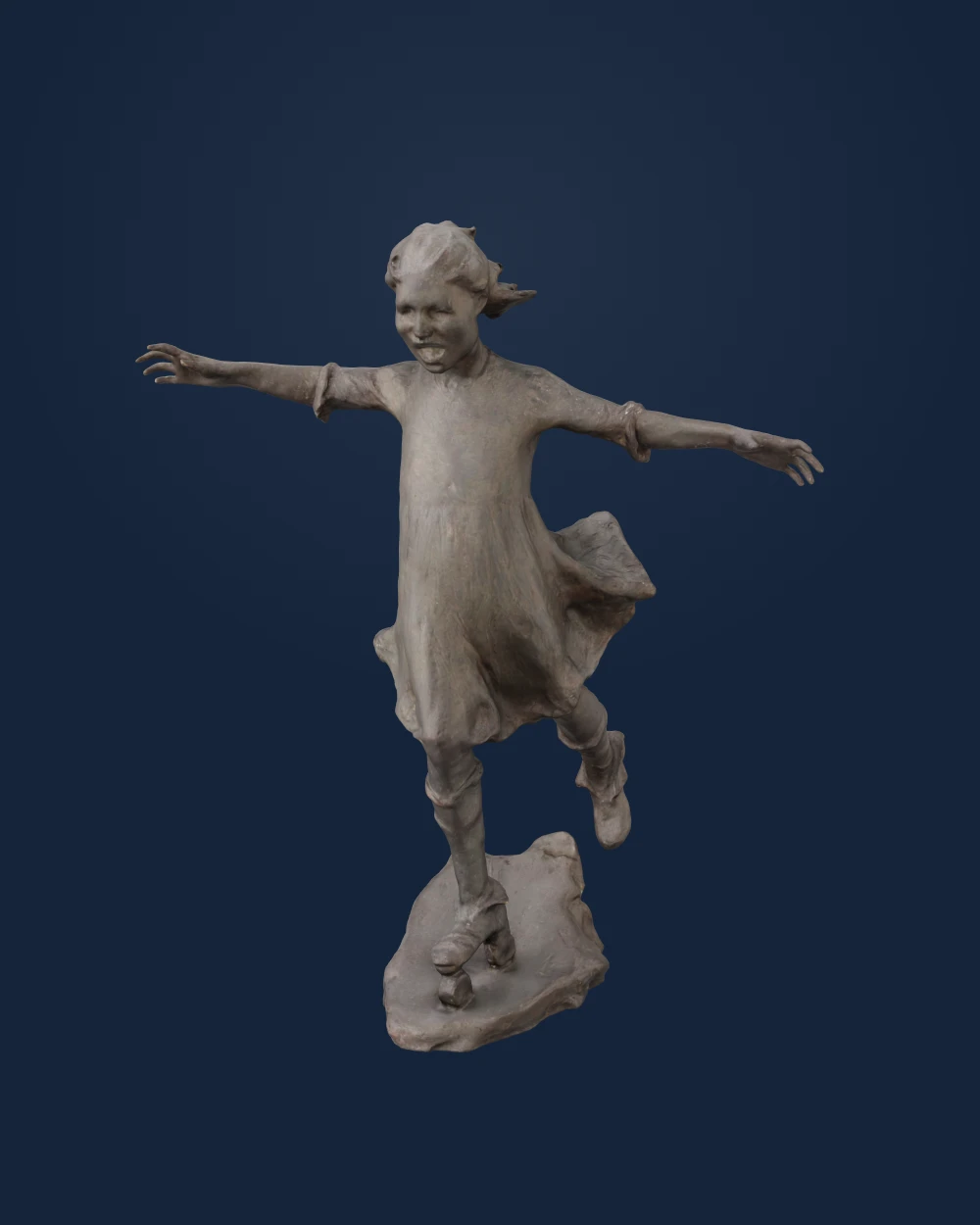
The Smithsonian lists this work as not on view. Eberle places the child’s weight well beyond her feet, using implied momentum rather than a stable standing balance.
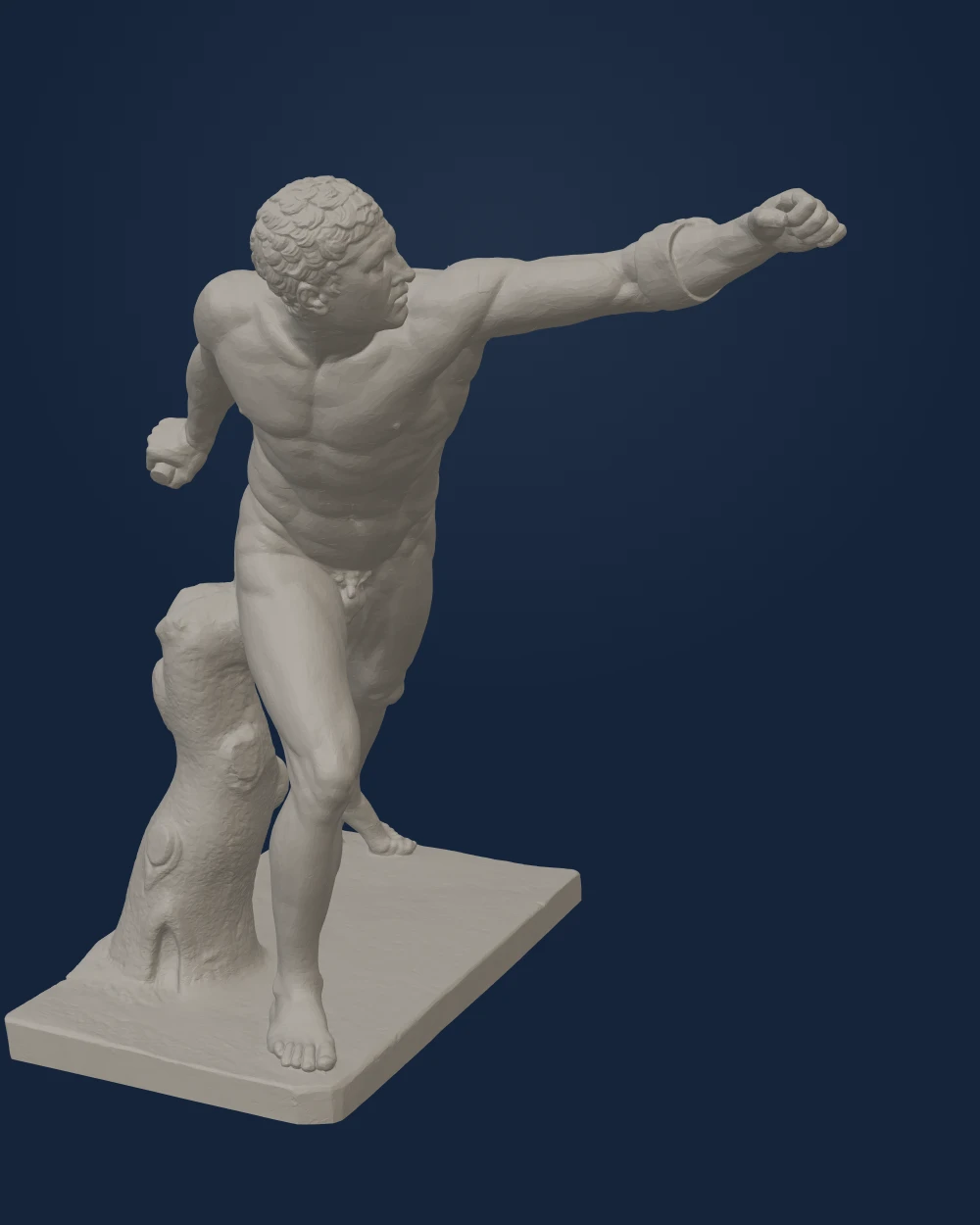
Often misnamed a gladiator, this fighter lunges along a line from rear heel to raised left arm. His upward gaze suggests an opponent above him, probably on horseback.