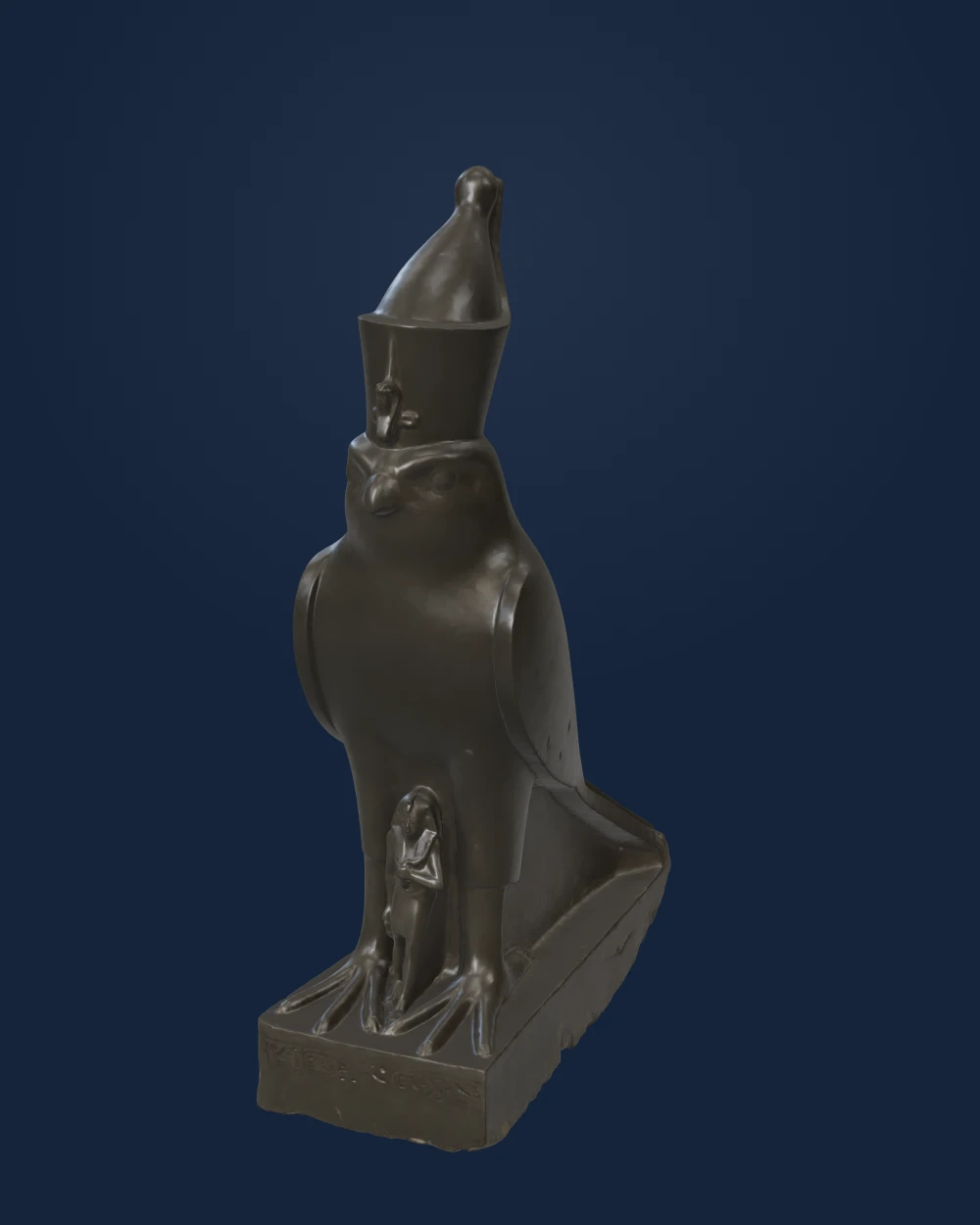
Horus Protecting Nectanebo Ii
The falcon is larger than the king, who stands between its legs. Both figures are carved from metagraywacke and share a continuous polished surface, linking the god and pharaoh in one block of stone.
Examine in 3D ↗Exhibition 03 · Devotion, protection, passage
Works associated with prayer, protection, remembrance, and passage. They come from distinct traditions and should be understood in relation to their original settings.
Begin exhibition ↓About this exhibition
These works were made for specific religious, ceremonial, commemorative, or protective purposes. Their function, materials, and original settings are central to understanding them; the object records provide the available context.
The falcon is larger than the king, who stands between its legs. Both figures are carved from metagraywacke and share a continuous polished surface, linking the god and pharaoh in one block of stone.
Examine in 3D ↗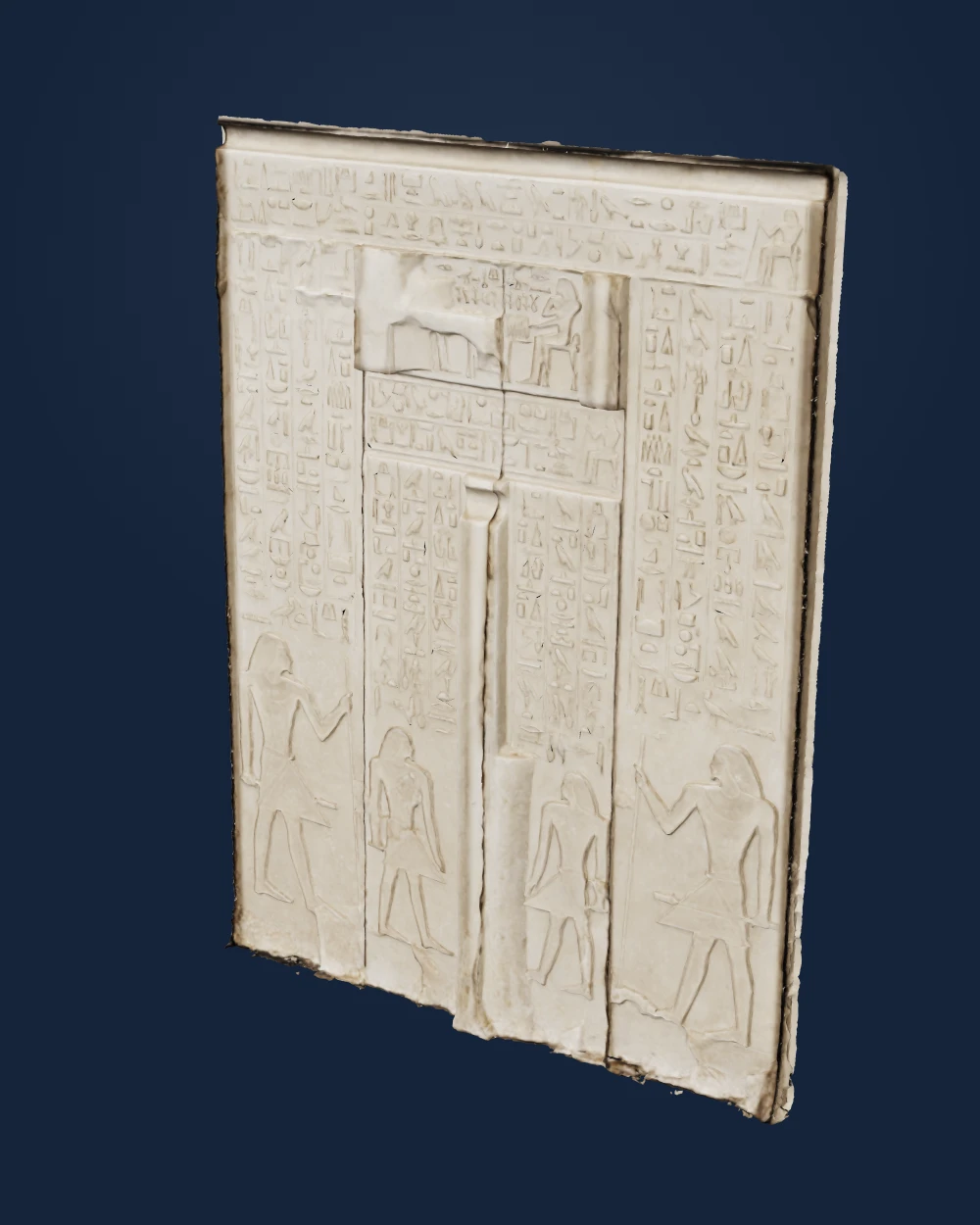
This is a limestone false door for the priest Iryenakhet, not an opening door. In ancient Egyptian funerary practice, false doors provided a symbolic point through which the deceased could receive offerings; the frontal design supports that use.
Examine in 3D ↗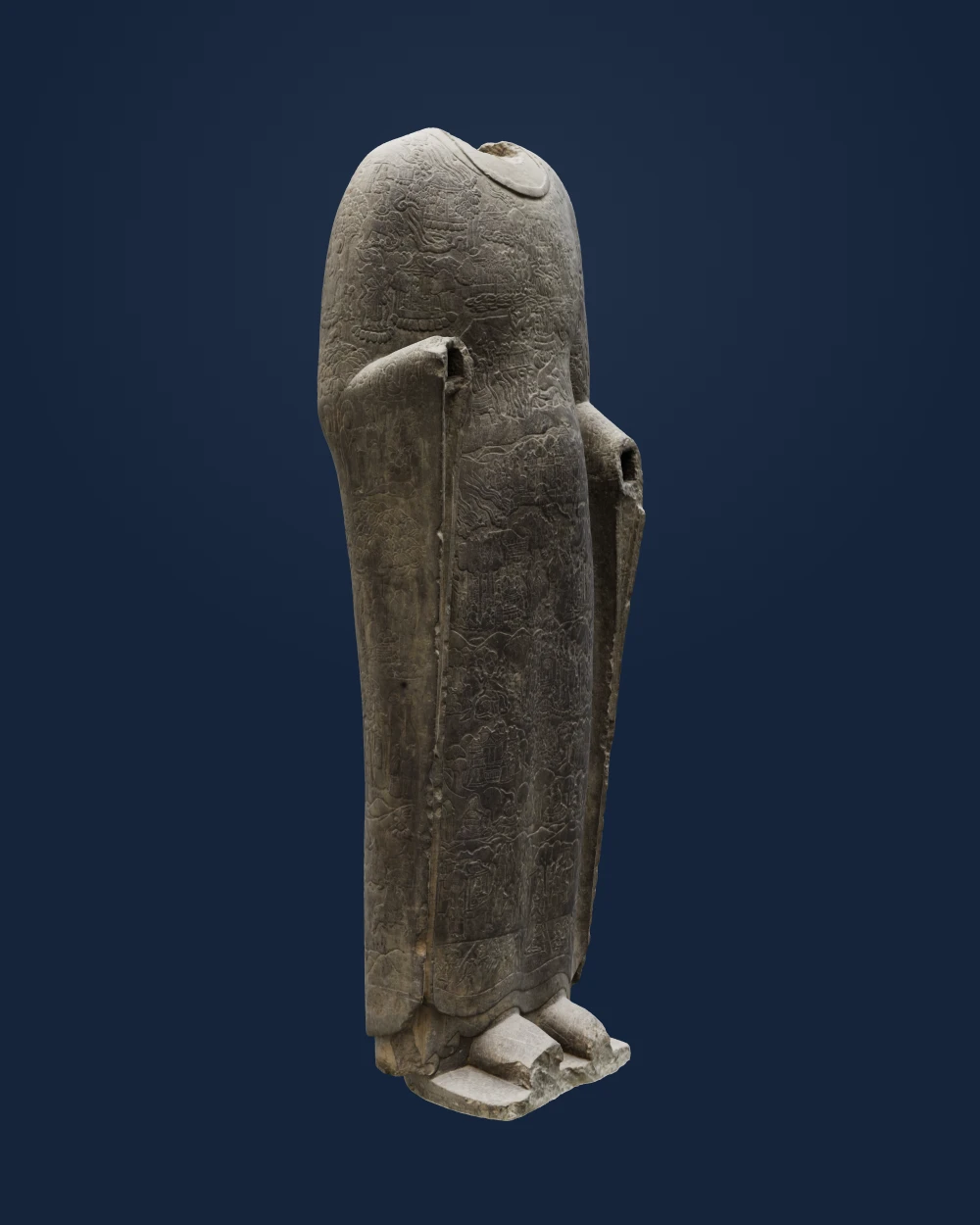
The robe carries carved images of the realms of desire across the chest, shoulders, and back. The program continues around the body, so a single frontal view does not show the whole design.
Examine in 3D ↗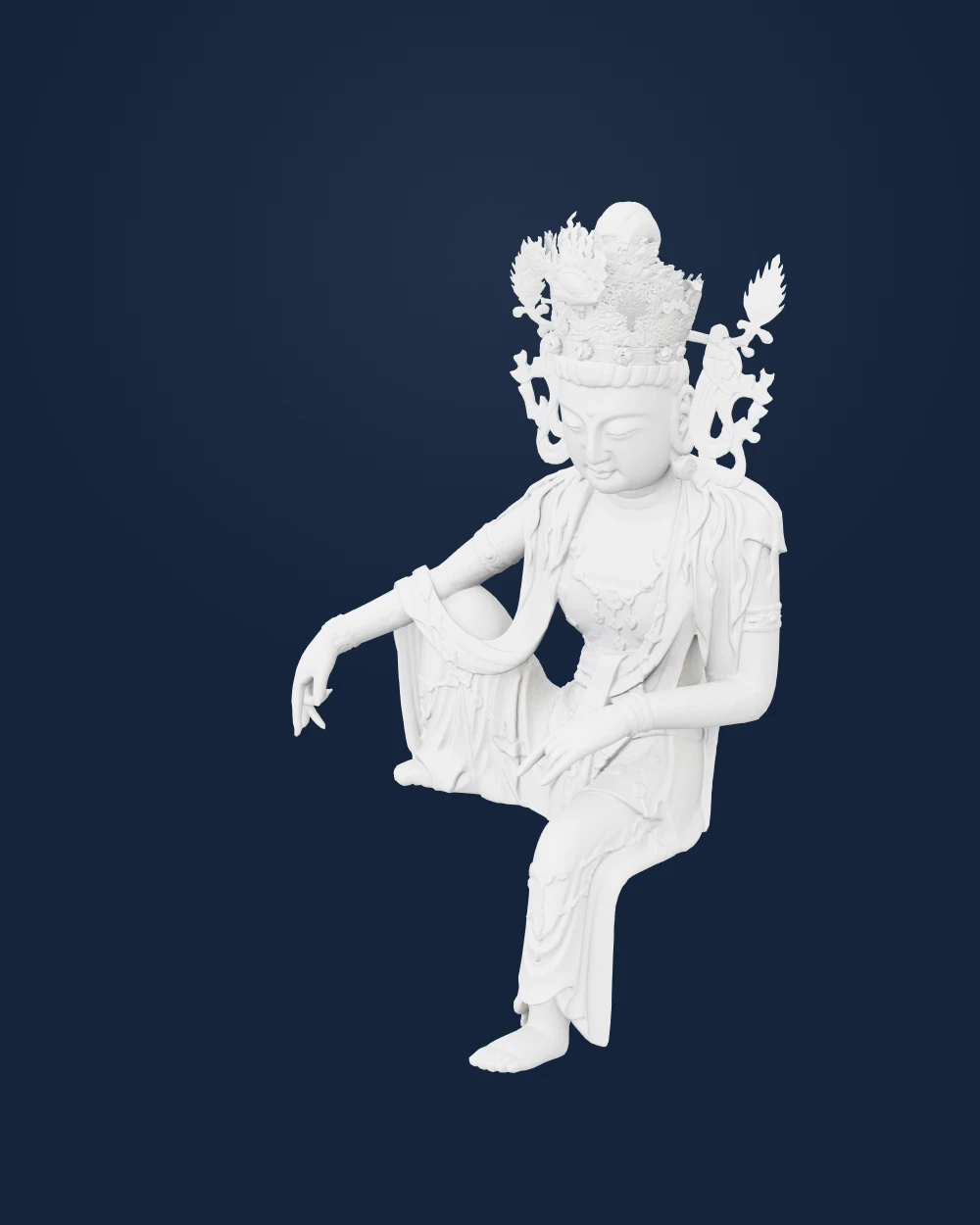
This Goryeo-period bodhisattva of compassion is made of gilt wood with copper, iron, and crystal elements. Low-angle light helps distinguish the gilding from the inset materials.
Examine in 3D ↗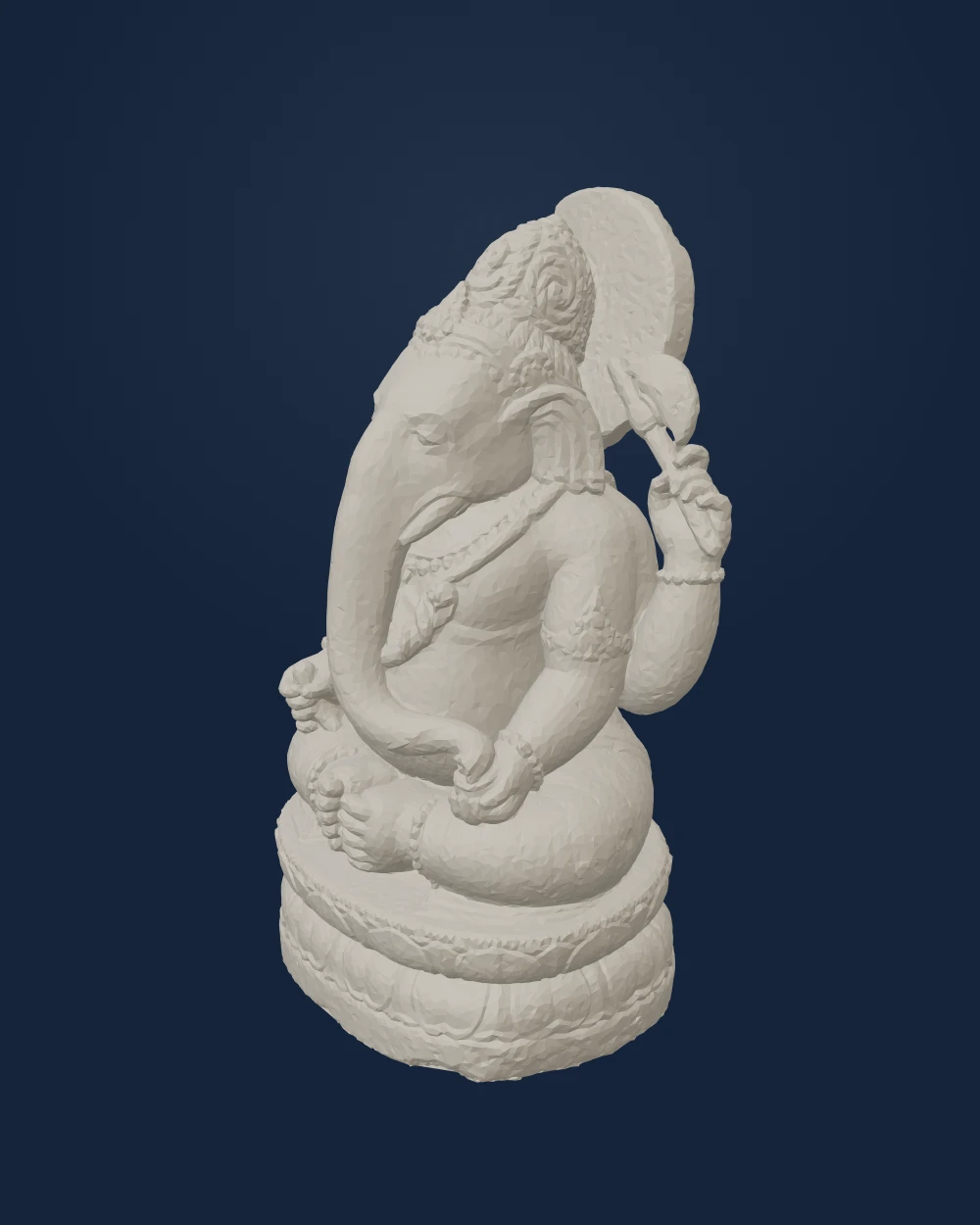
Javanese carvers made this figure from andesite, a volcanic stone with a visibly pitted grain. The transition between elephant head and human body is carved as a continuous form rather than a joined assembly.
Examine in 3D ↗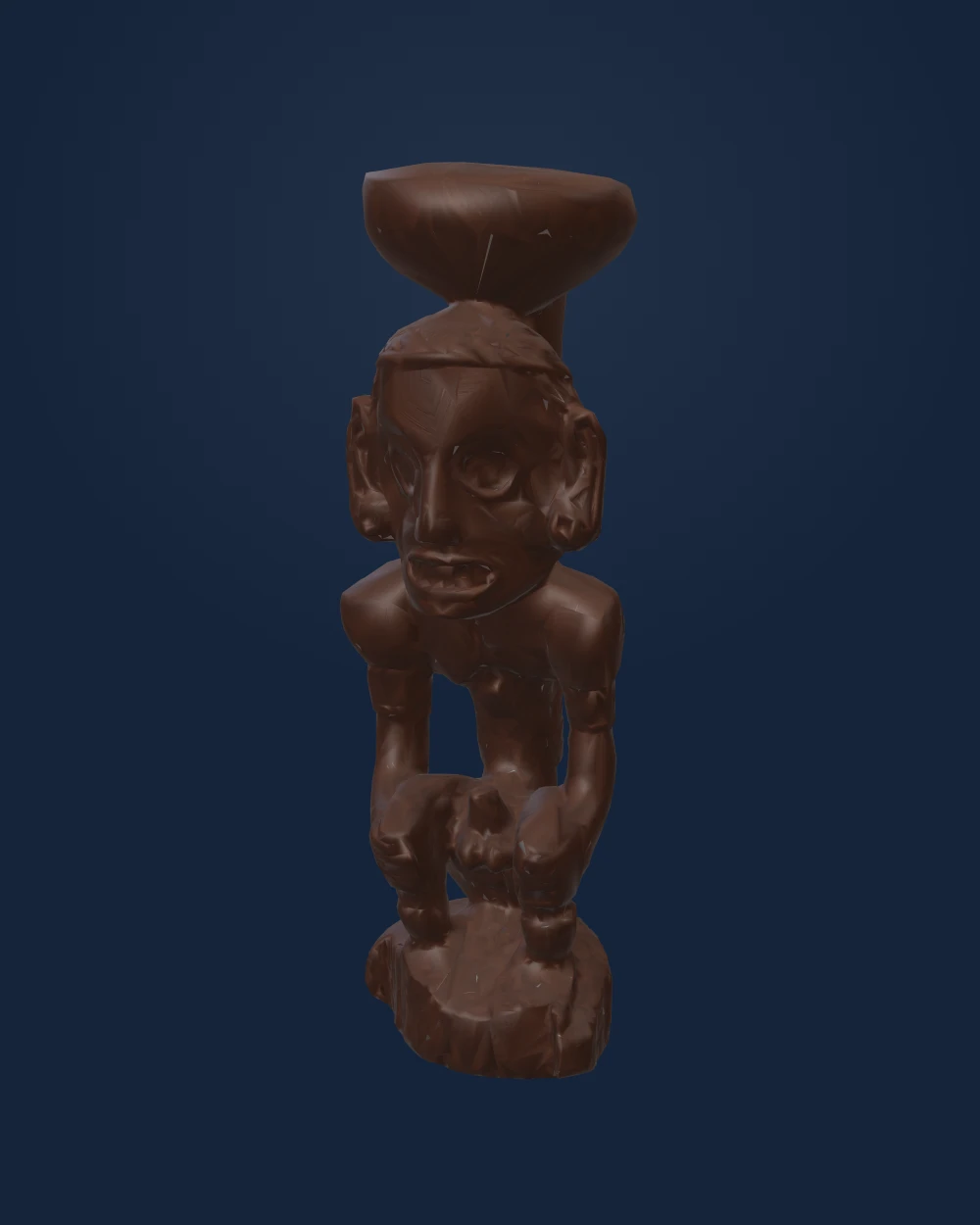
Made around 1000 CE from guaiacum wood with shell inlay, this figure functions as a stand. Its dense wood and supporting form are central to how the object was made and used.
Examine in 3D ↗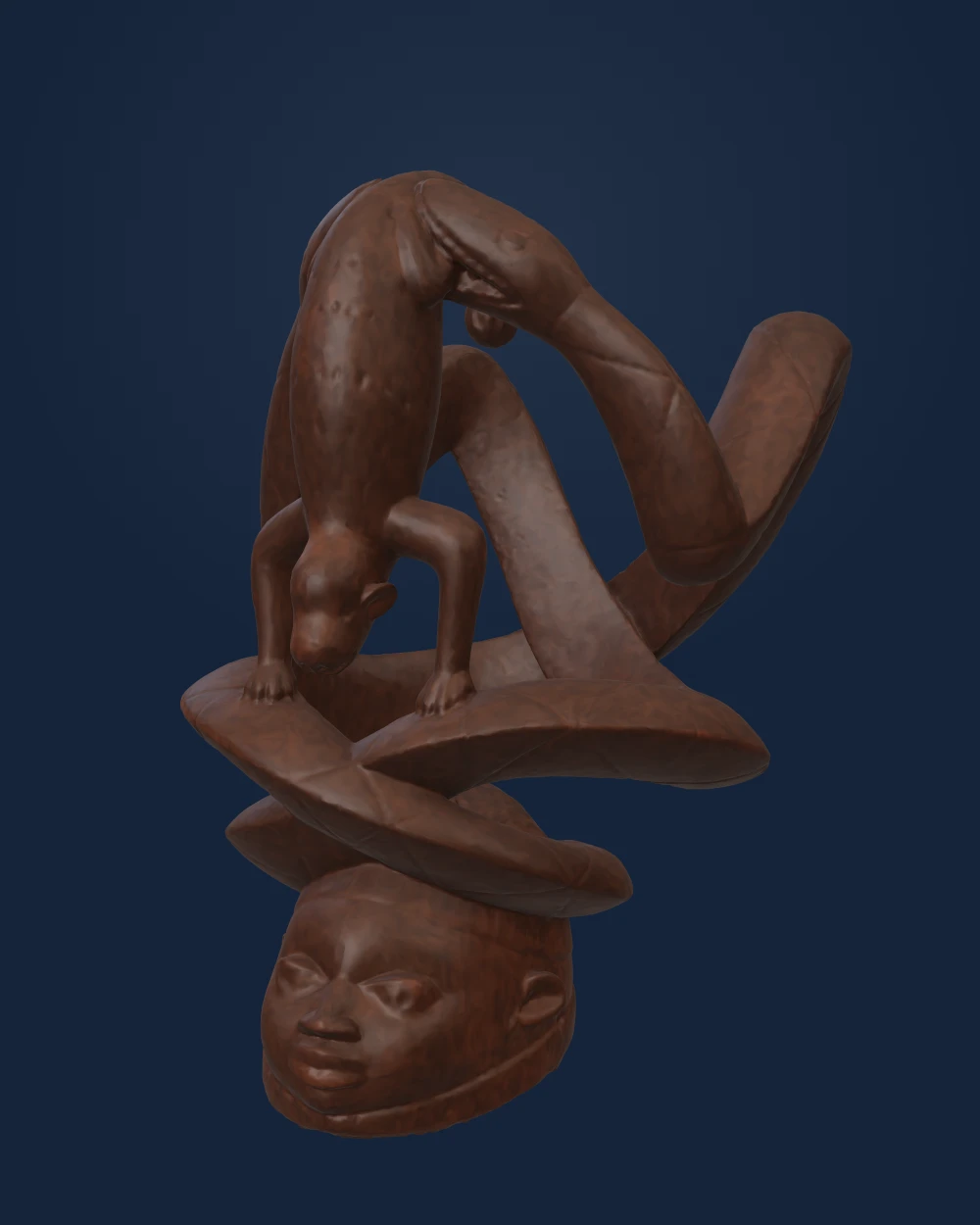
This helmet mask was worn on top of the head rather than over the face. The hollow underside shows how it was fitted for a dancer’s crown.
Examine in 3D ↗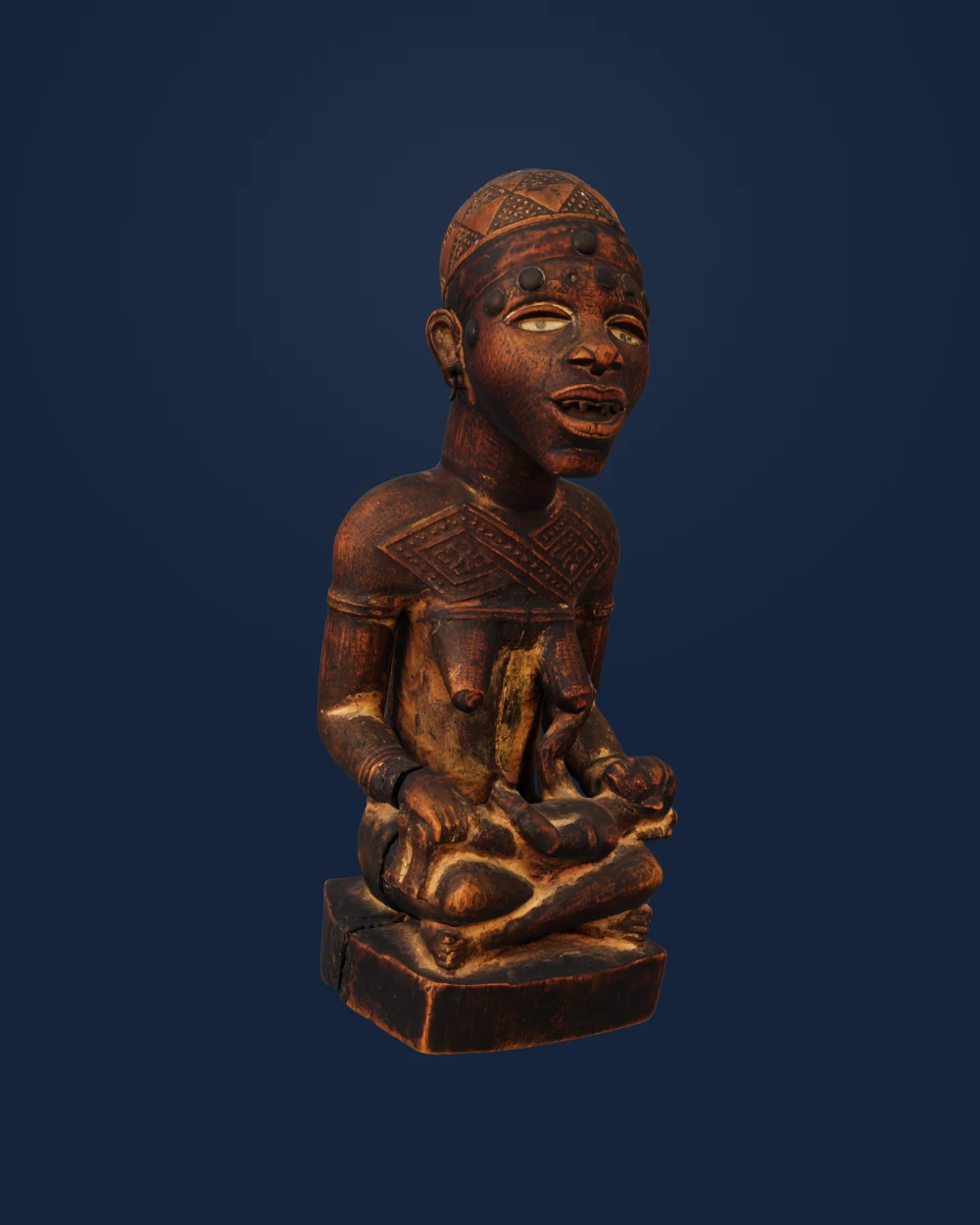
Wood, glass, beads, brass tacks, and pigment are combined in this maternity figure. The mother’s arm and the child form the central structural link in the composition.
Examine in 3D ↗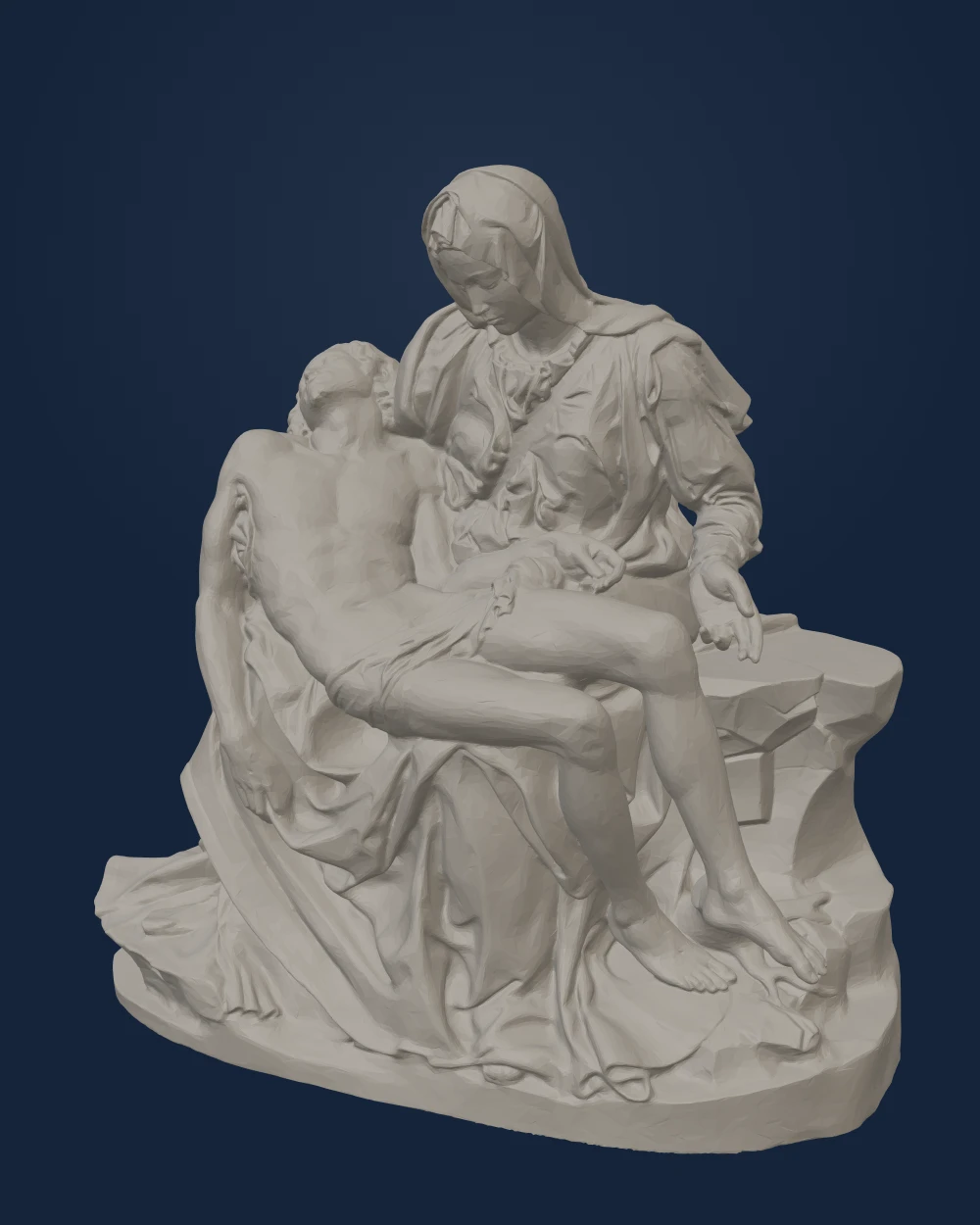
This is a cast after Michelangelo’s marble Pietà, completed before he was twenty-five. The original is the only work he signed, with the signature placed on the strap across Mary’s chest.
Examine in 3D ↗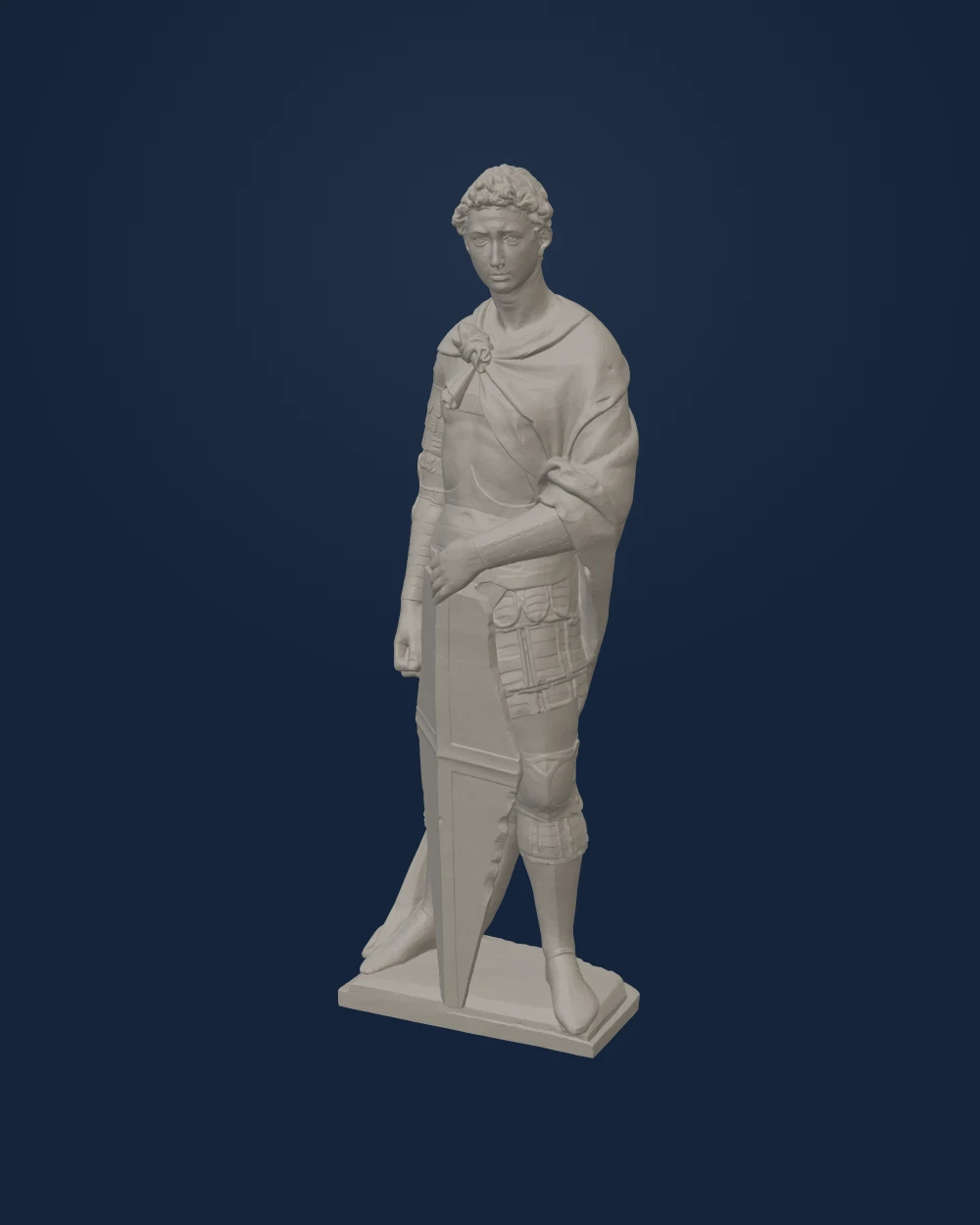
Donatello positioned Saint George with weight forward, legs apart, and shield grounded. The stance was designed to be legible from the street below the original niche.
Examine in 3D ↗