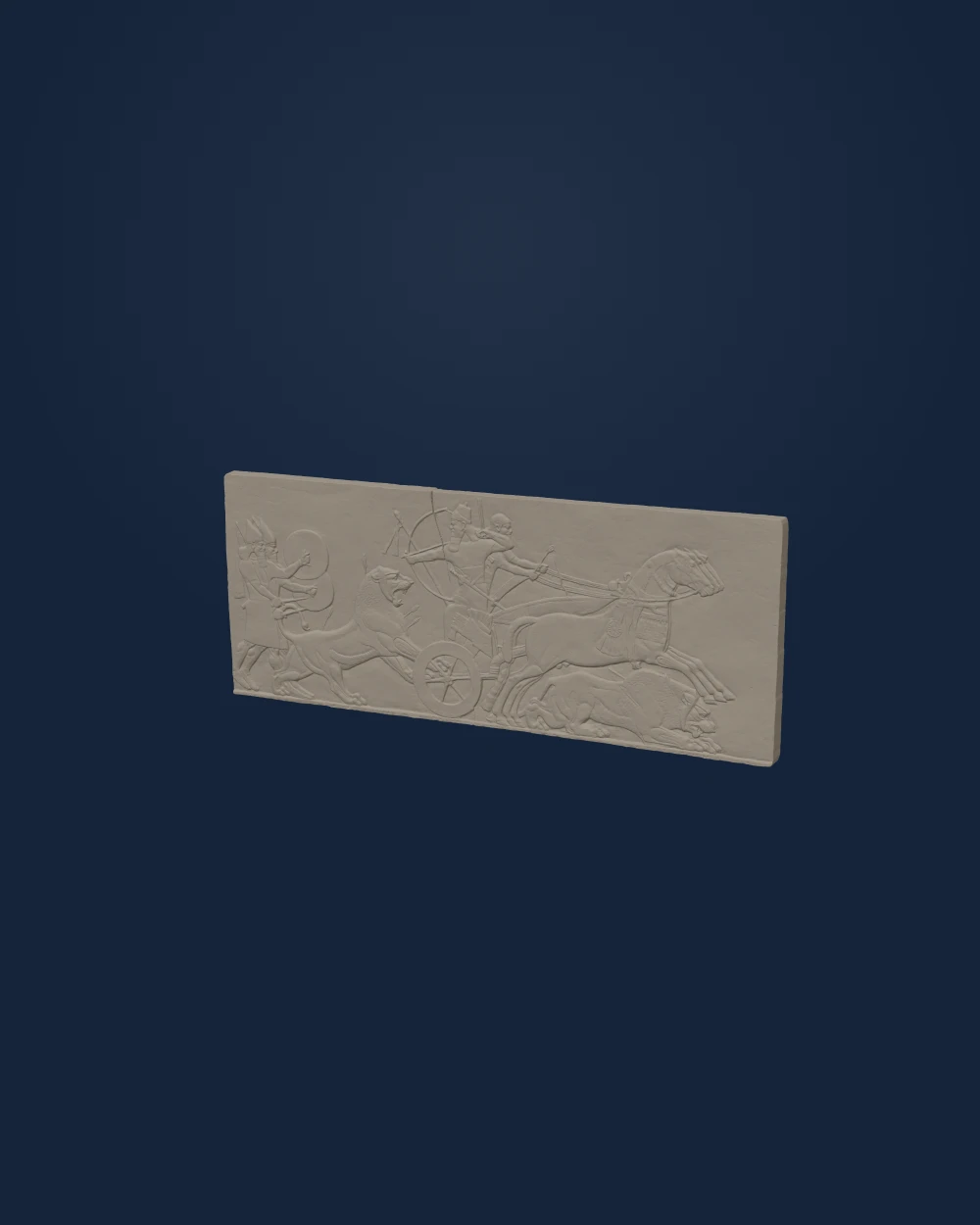
Ashurnasirpal II on Lion Hunt
This gypsum-alabaster relief from the Northwest Palace at Nimrud represents a royal hunt in shallow carving. Low-angle light helps separate details such as reins, bowstrings, and manes.
Examine in 3D ↗Exhibition 05 · Carving, relief, ornament
Ten works in which shallow relief, incised lines, drilled depth, modeled clay, and painted or carved ornament carry essential information.
Begin exhibition ↓About this exhibition
In these works, meaning is often carried by the surface: shallow relief, incised lines, paint, glaze, drill work, and small changes of depth. Use the lighting controls to make those details clearer.
This gypsum-alabaster relief from the Northwest Palace at Nimrud represents a royal hunt in shallow carving. Low-angle light helps separate details such as reins, bowstrings, and manes.
Examine in 3D ↗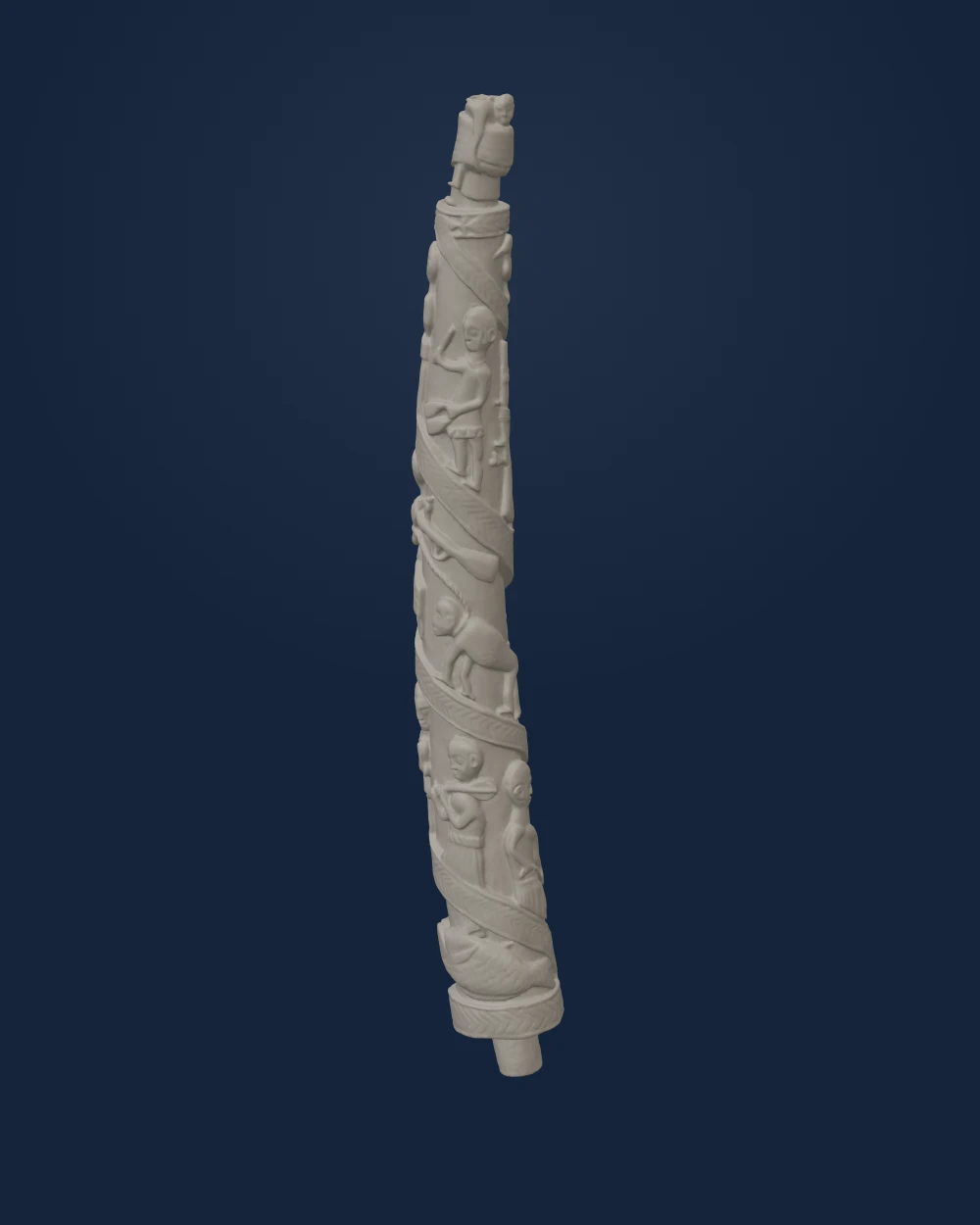
Carved by a Kongo artist in 1861, this relief follows the taper and curve of the ivory tusk. Its design changes as the curved surface is viewed from different angles.
Examine in 3D ↗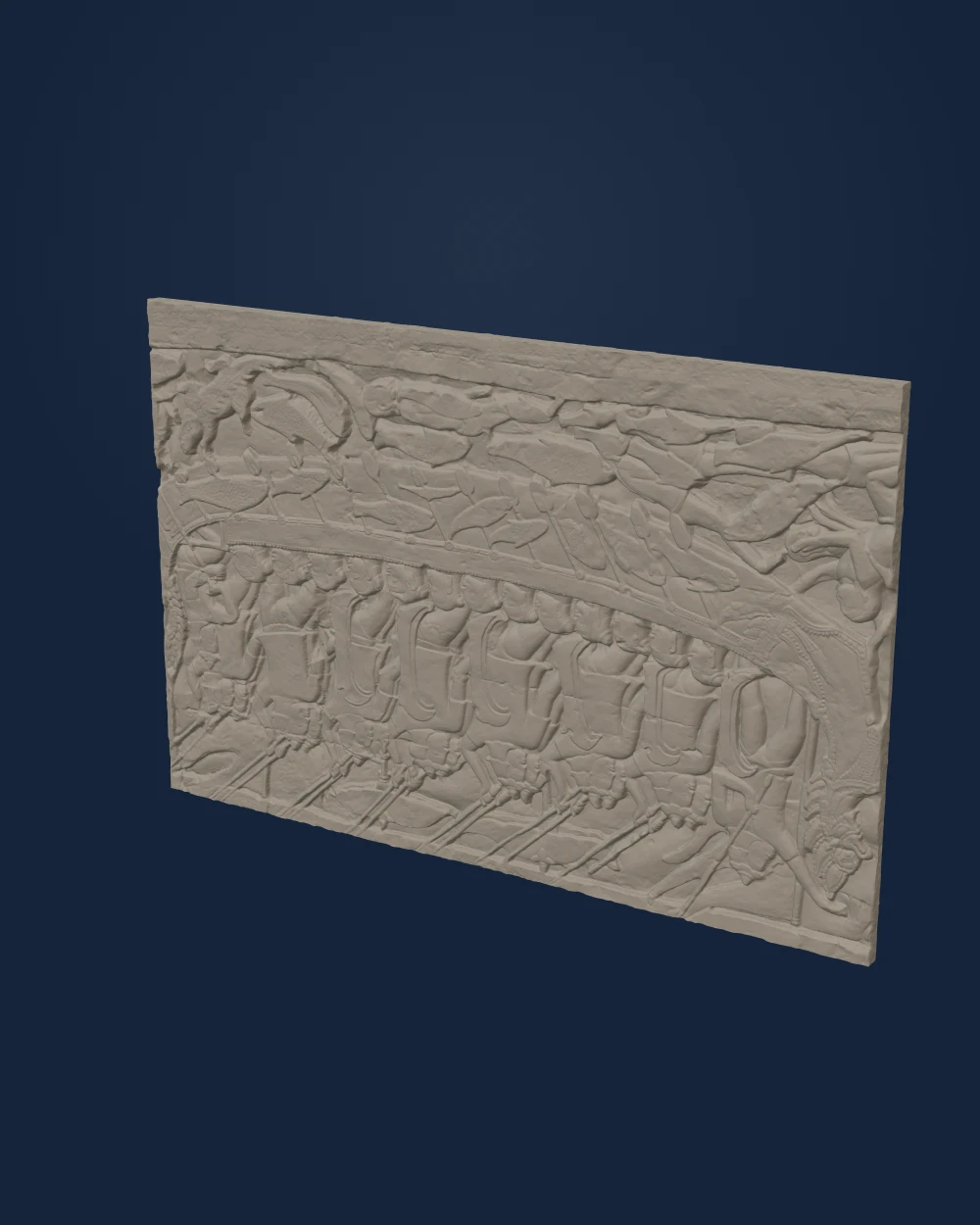
This 1904 plaster by Charles Carpeaux records a twelfth- to thirteenth-century naval-battle relief from the Bayon. It preserves the scene through a cast made from an earlier surface.
Examine in 3D ↗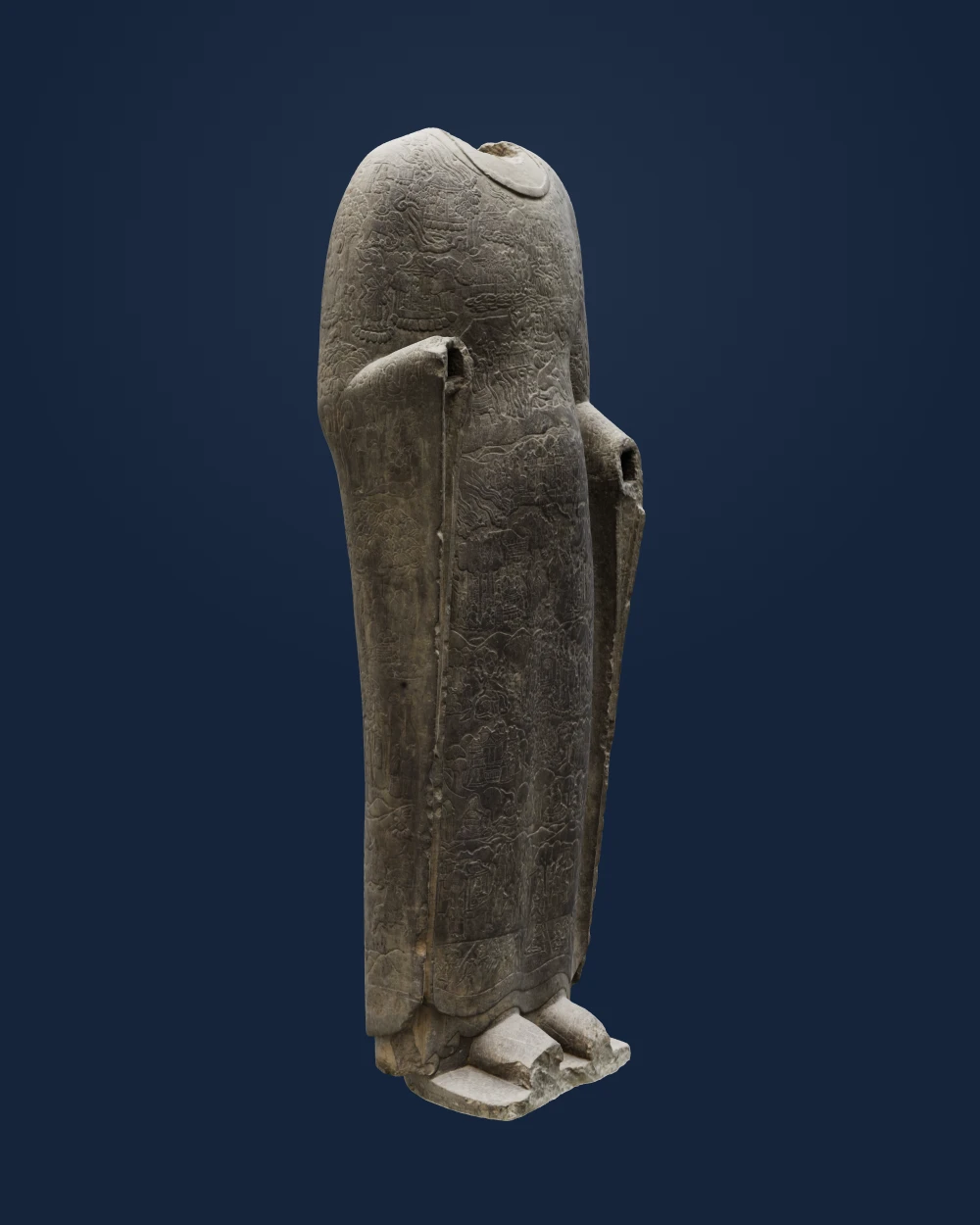
The Northern Qi carver used the robe as a picture plane, working the realms of desire into the limestone drapery. The imagery is part of the figure’s surface as well as its iconography.
Examine in 3D ↗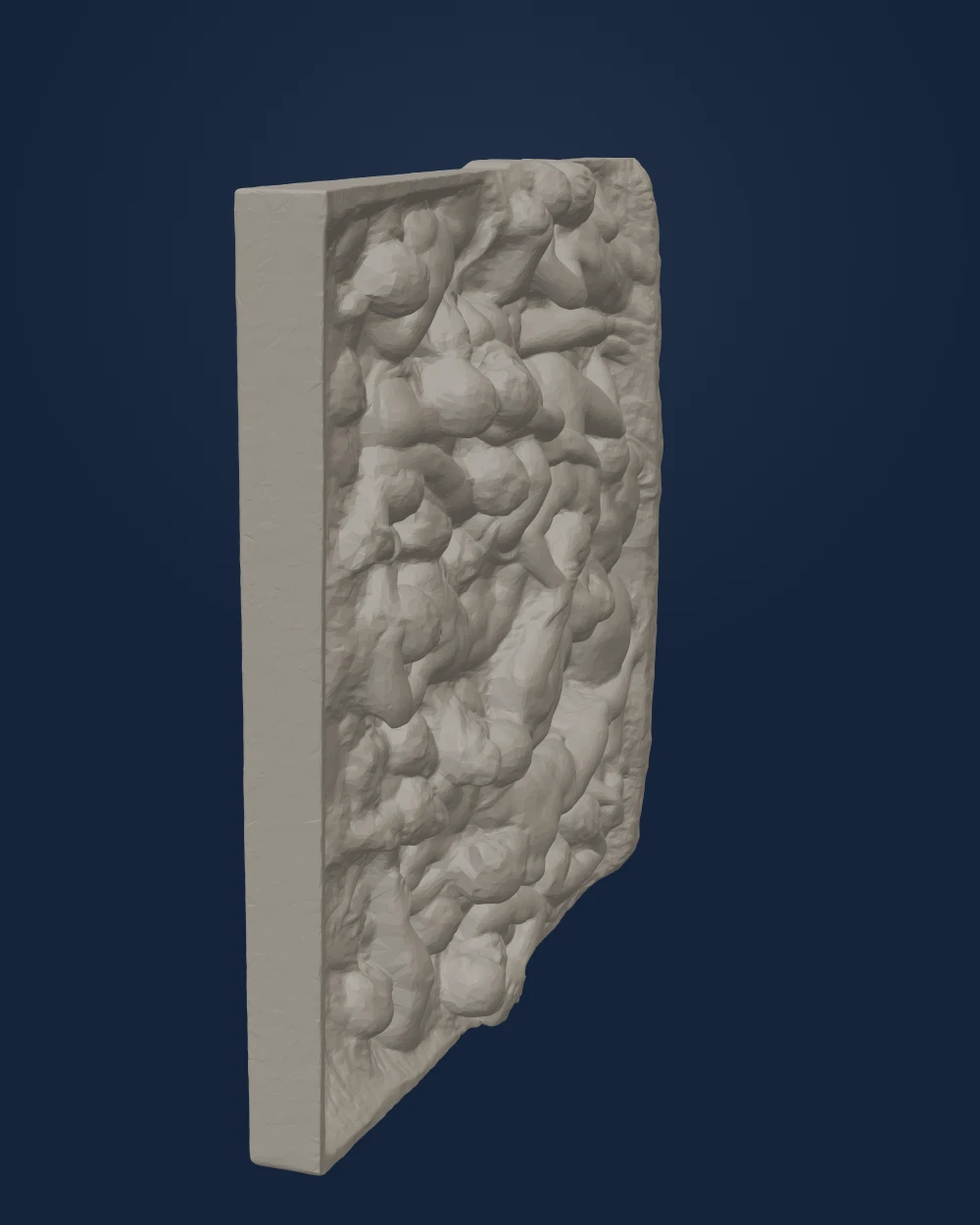
Michelangelo carved this relief while still in his teens. Some figures project strongly from the marble while others remain shallow, and the rough upper edge retains visible tool marks.
Examine in 3D ↗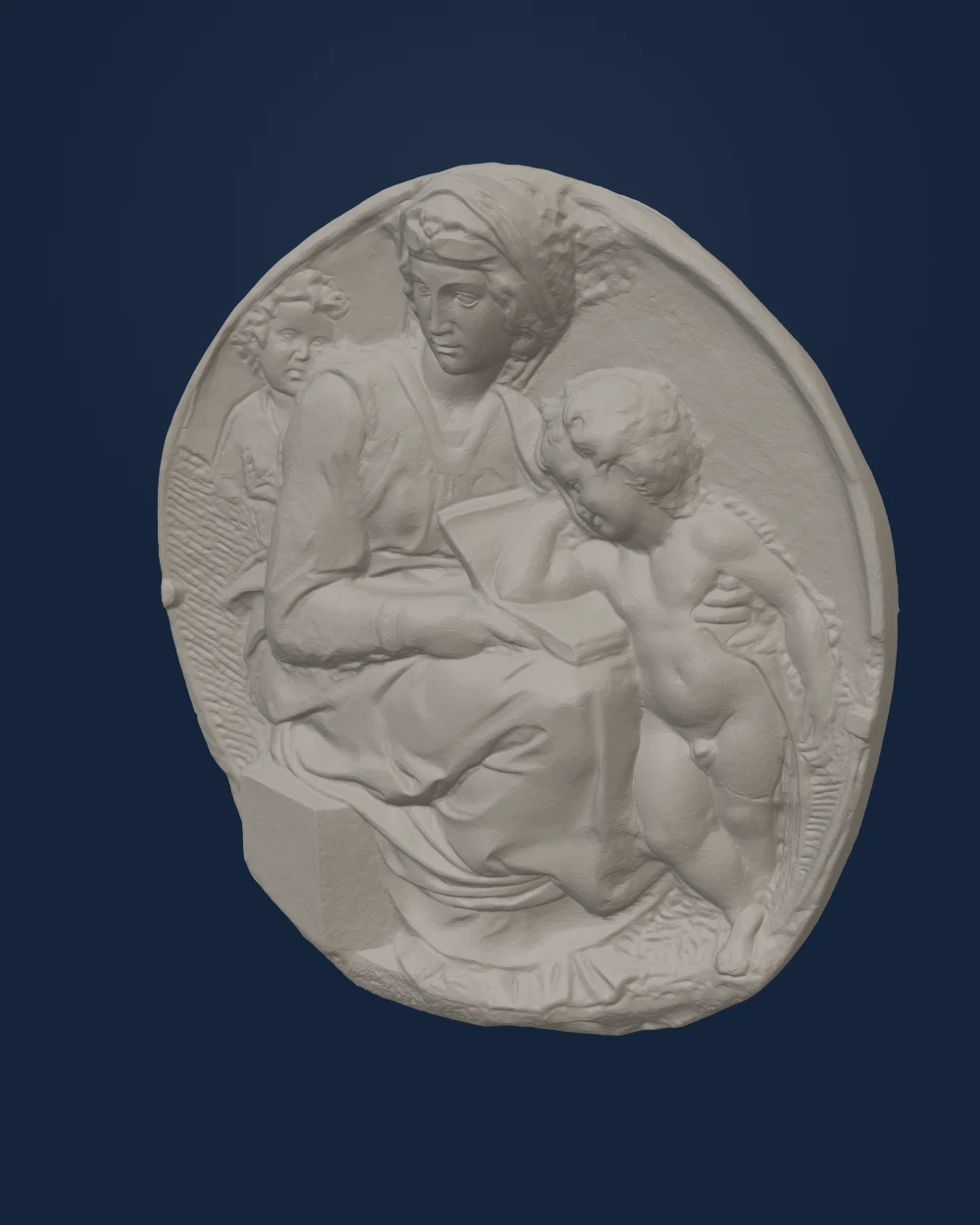
This single marble round uses several depths of carving. The Virgin’s head projects almost fully into the round, while the figures behind her are reduced to much shallower forms.
Examine in 3D ↗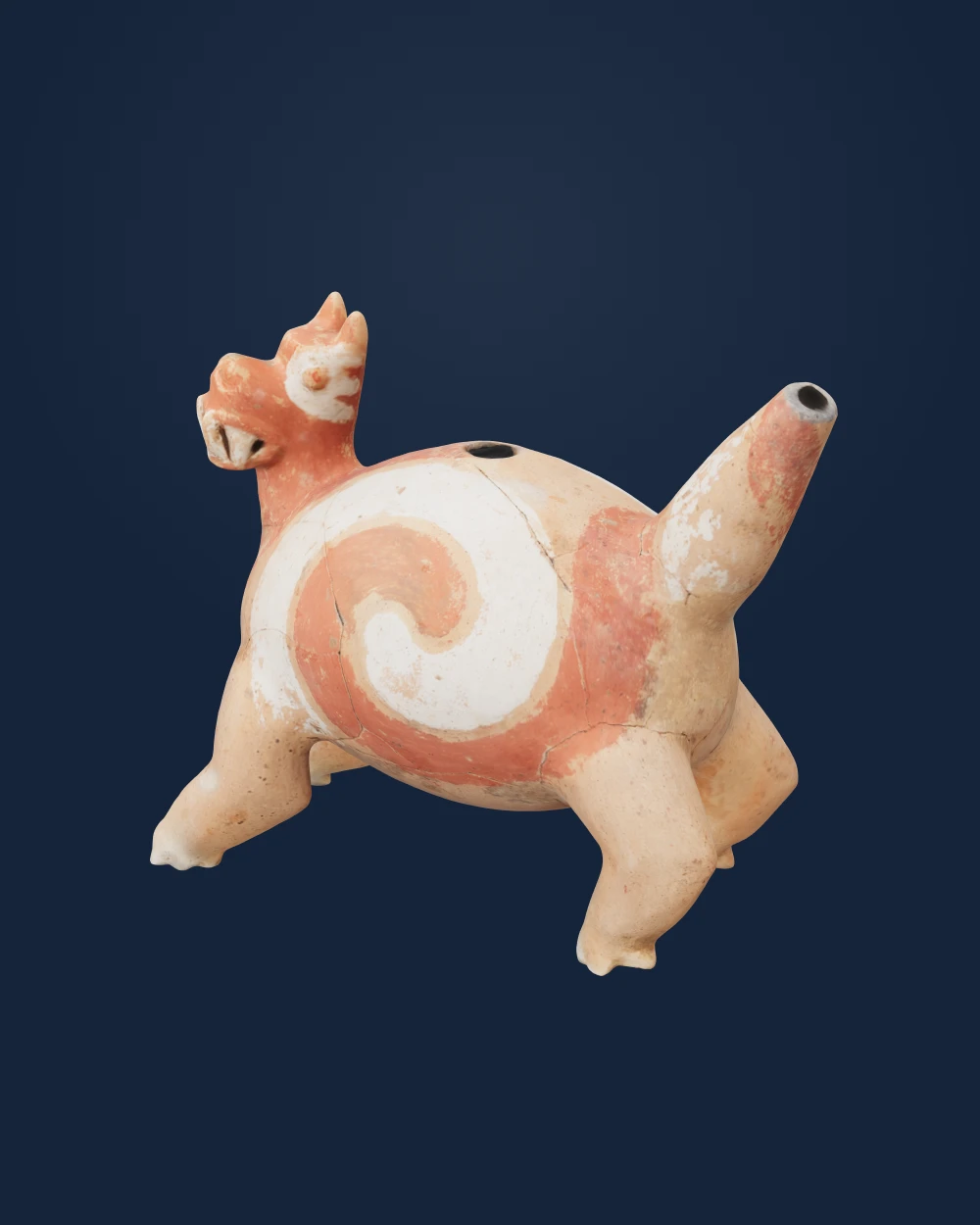
This Quapaw ceramic vessel takes the form of the Underwater Panther, a being in Mississippian belief. The hollow container is integrated into the animal body rather than added as a separate element.
Examine in 3D ↗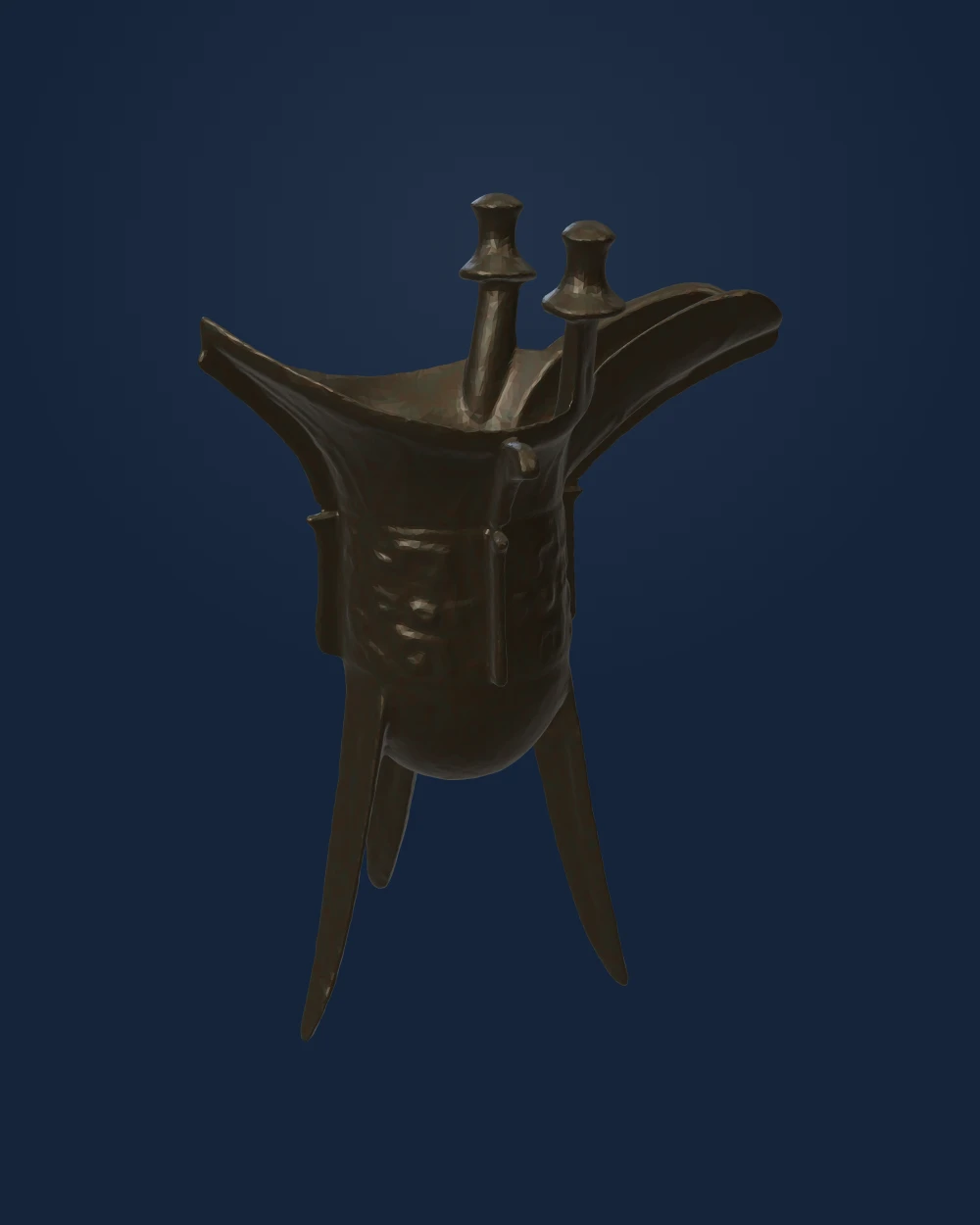
The ornament on this late Shang wine vessel was made through a mold: ridges visible on the bronze began as recessed designs in the casting surface.
Examine in 3D ↗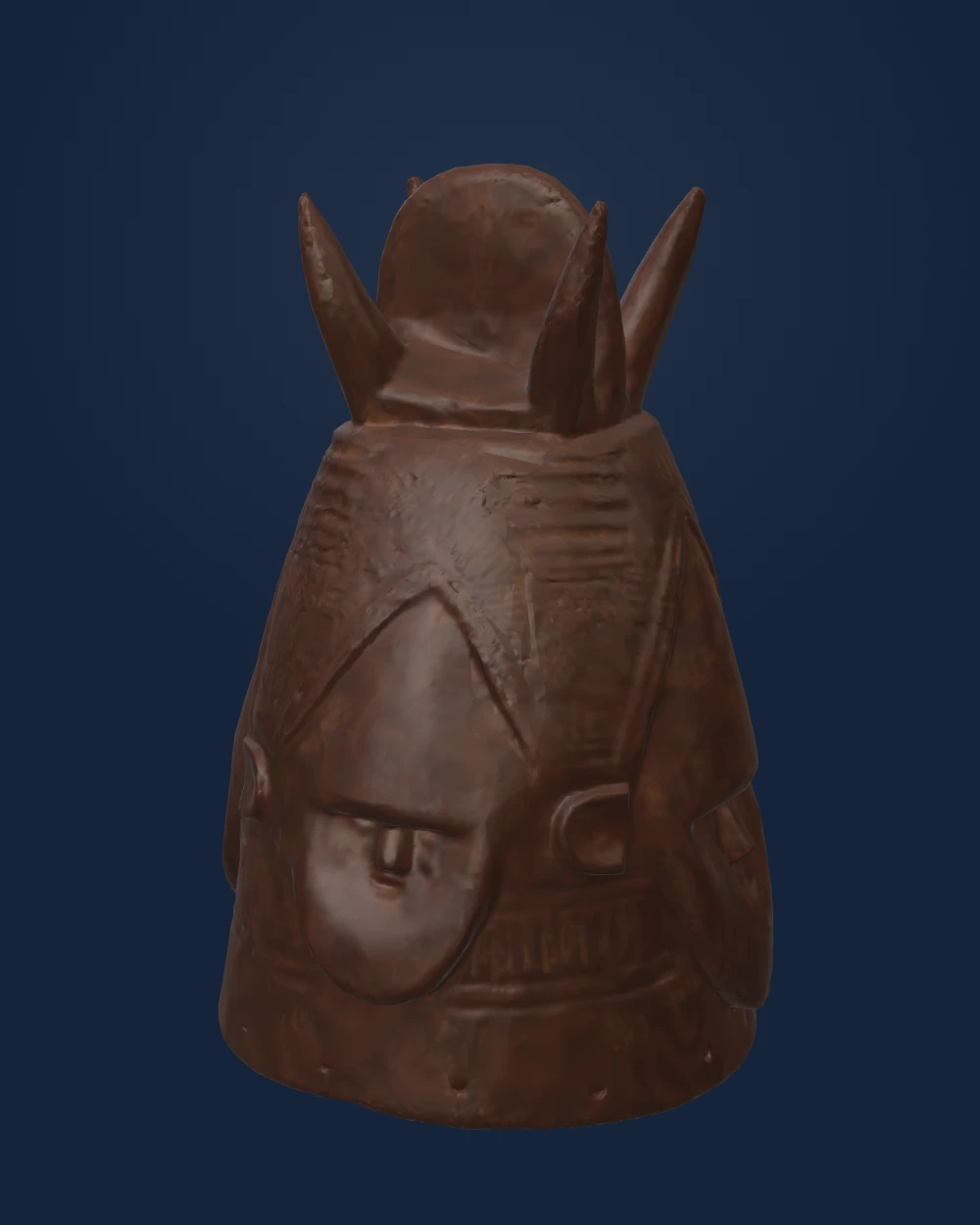
This helmet mask has four faces and no single back. Each quarter turn presents a different face, making the work legible from multiple directions.
Examine in 3D ↗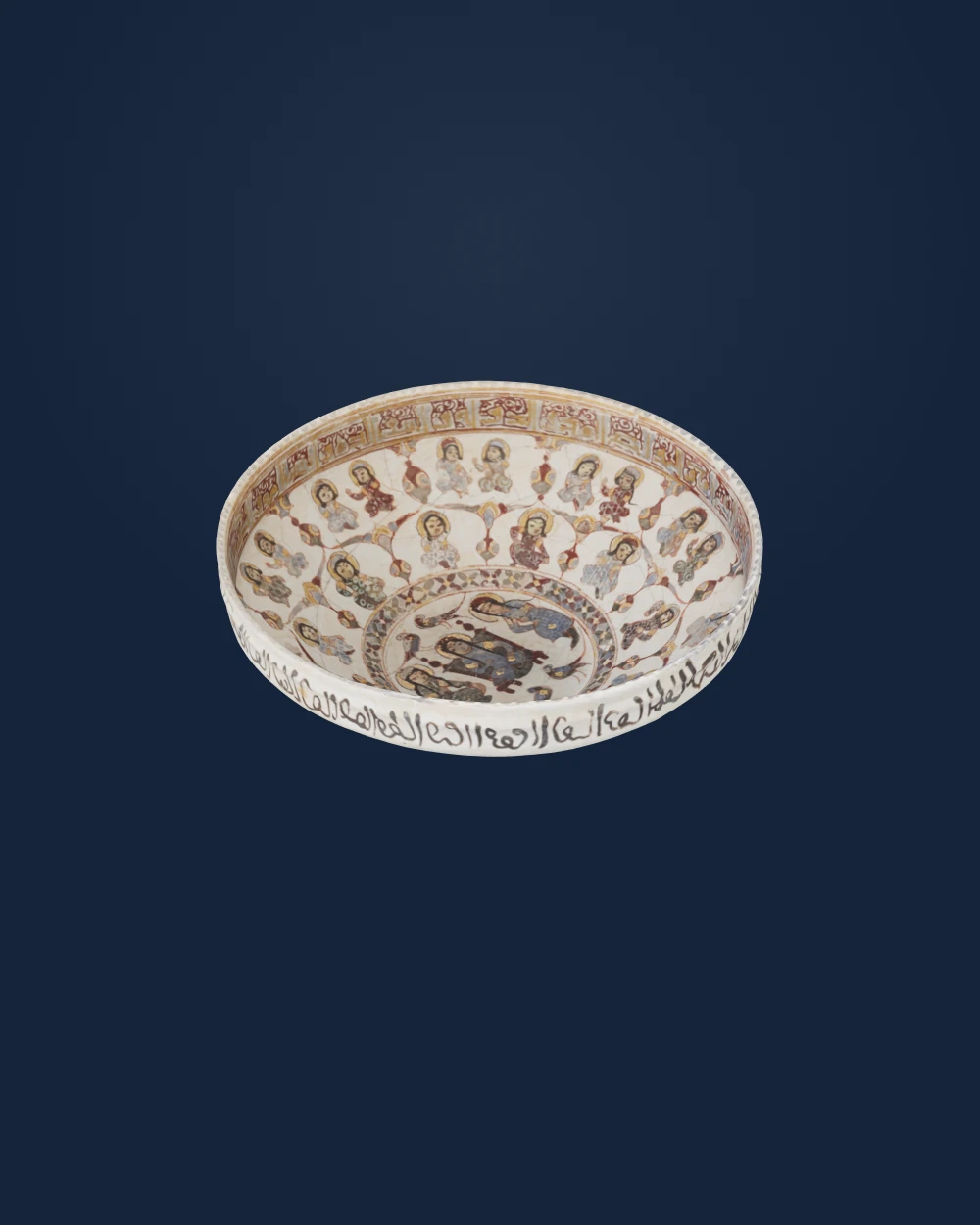
Overglaze polychromy and gold depict a courtly gathering on stonepaste. The painted figures follow the curved profile of the bowl.
Examine in 3D ↗