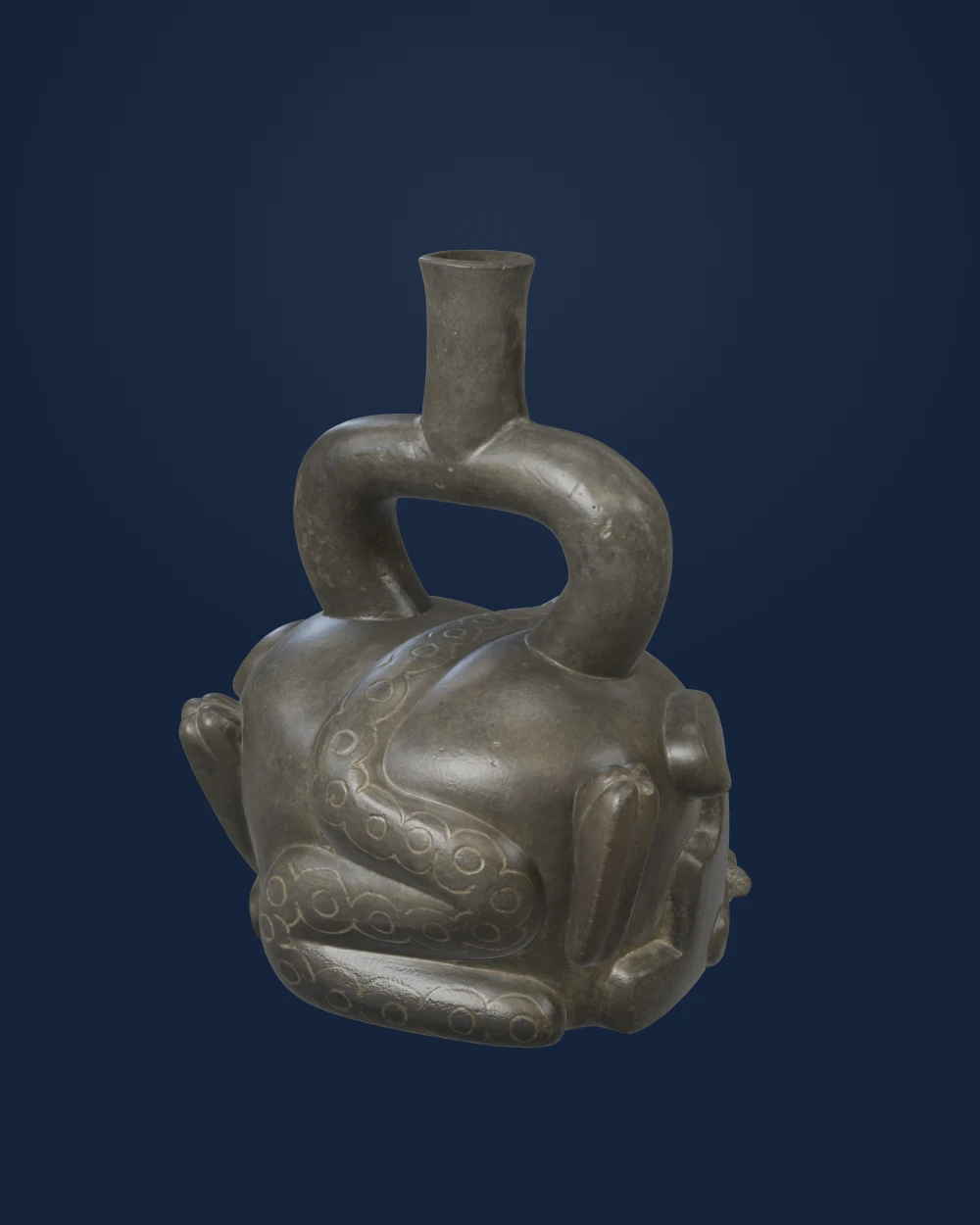
Stirrup-spout bottle with feline and snake
A feline and a snake share this ceramic vessel’s body. The stirrup-shaped spout is integrated with the animal form, showing how the potter combined container and image in one structure.
Examine in 3D ↗Exhibition 06 · Animals as vessels, guardians, symbols, and performers
Across three thousand years and several regions, these works use animals to carry religious, political, domestic, and ceremonial meanings. They are not a single tradition; each has its own context and purpose.
Begin exhibition ↓About this exhibition
Compare what each animal form is made to do. Some contain liquid, guard a place, support a ritual, represent a deity, or carry a rider. The model can help reveal details on the back, underside, and sides of each work.
A feline and a snake share this ceramic vessel’s body. The stirrup-shaped spout is integrated with the animal form, showing how the potter combined container and image in one structure.
Examine in 3D ↗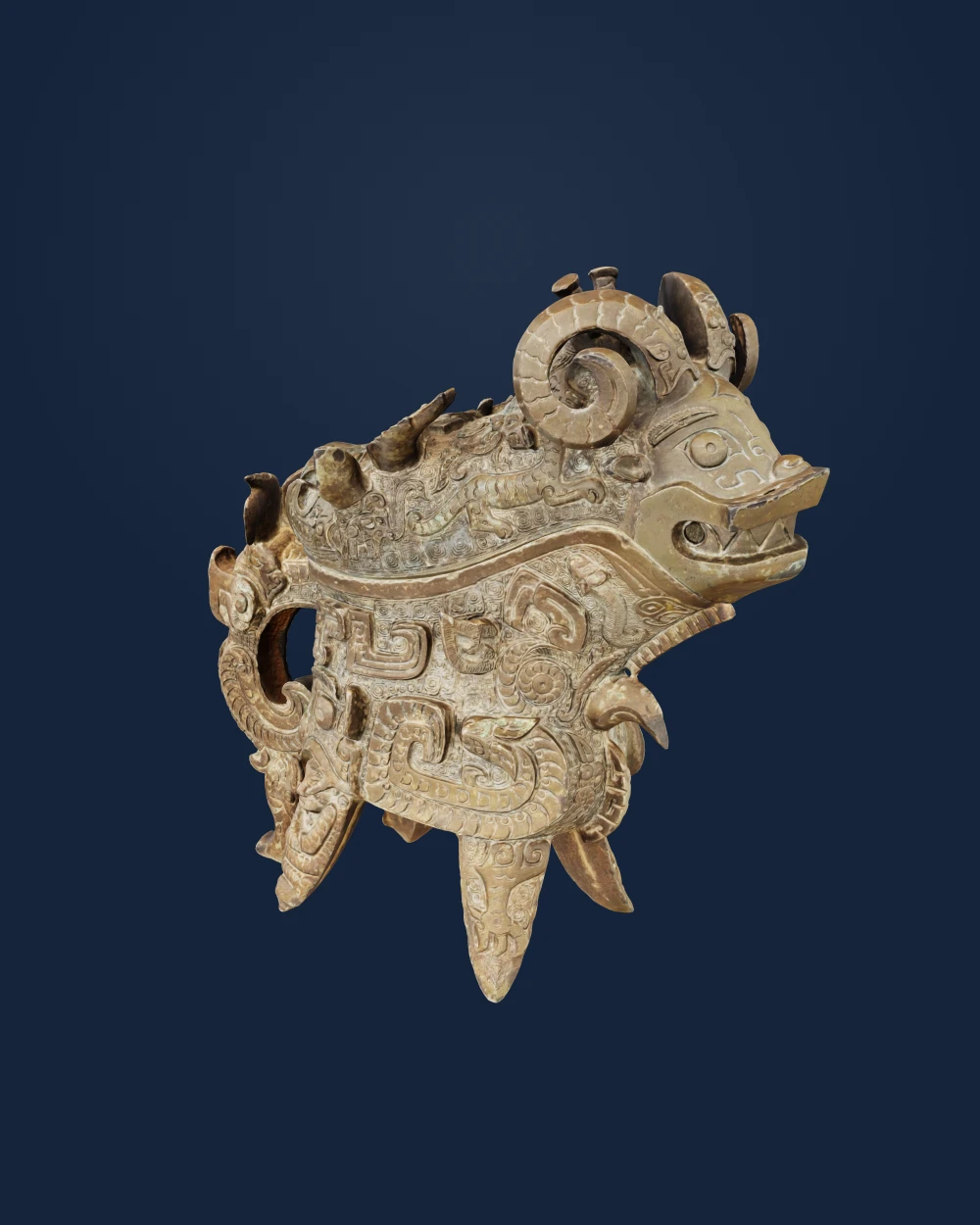
Shang casters covered this bronze wine ewer with masks, dragons, and animal forms. Low-angle light makes the distinctions between raised motifs and the underlying vessel easier to see.
Examine in 3D ↗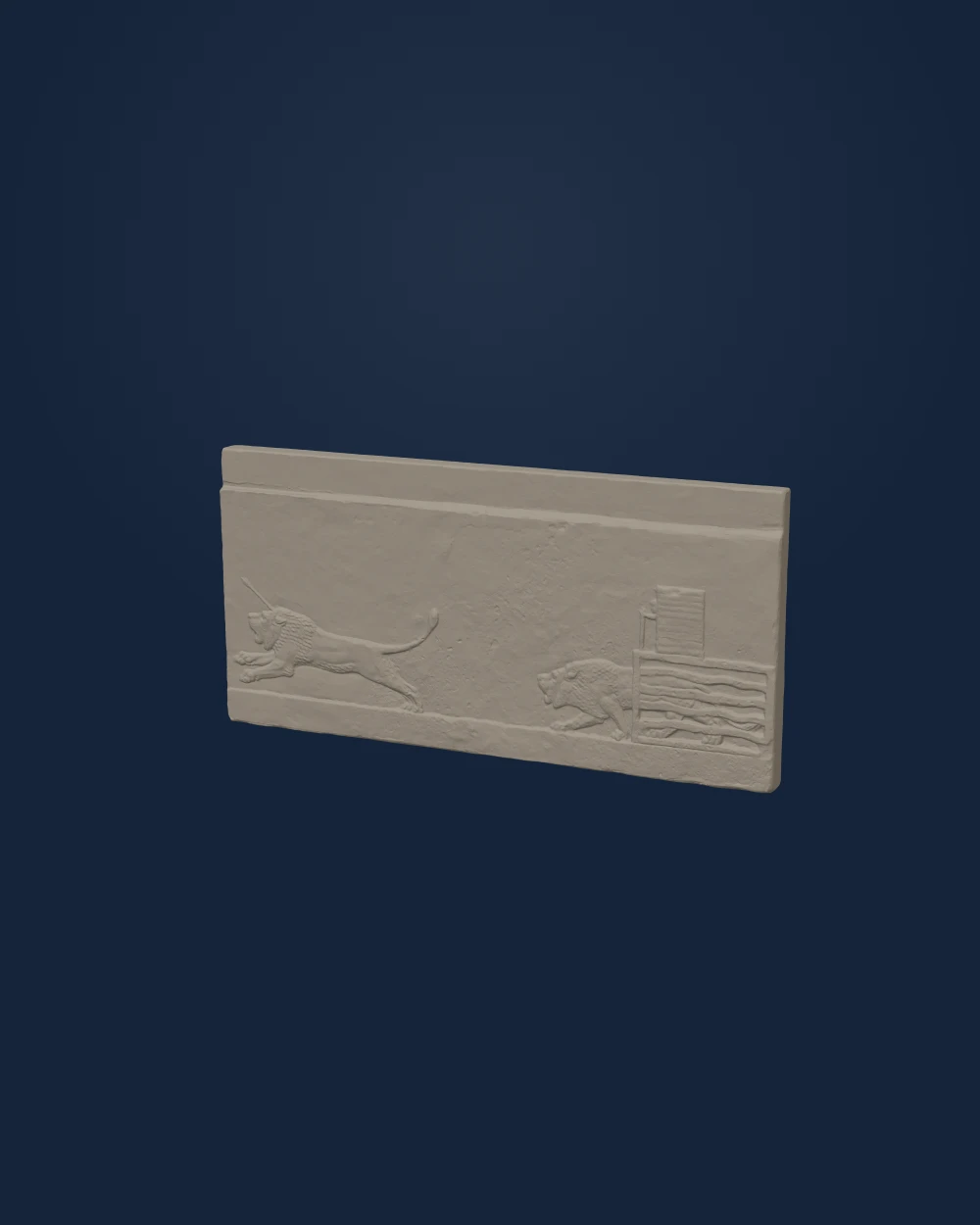
This relief shows a keeper lifting a cage door as a lion runs out. It was made for Ashurbanipal’s palace at Nineveh, where royal hunting scenes represented the king’s control over dangerous animals.
Examine in 3D ↗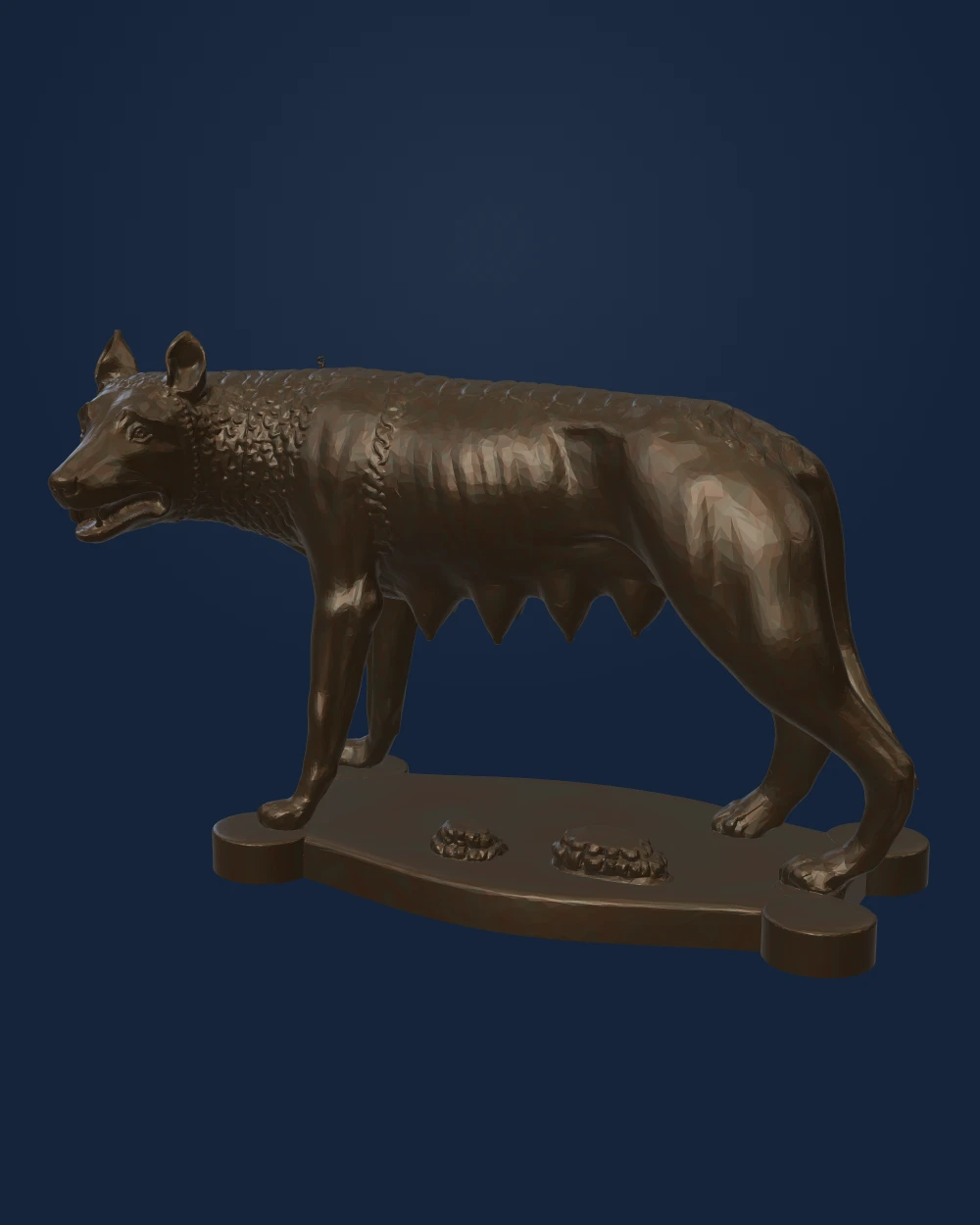
The bronze she-wolf is shown with the twins beneath her. The wolf and the children were made centuries apart, an important example of how a familiar image can combine elements from different dates.
Examine in 3D ↗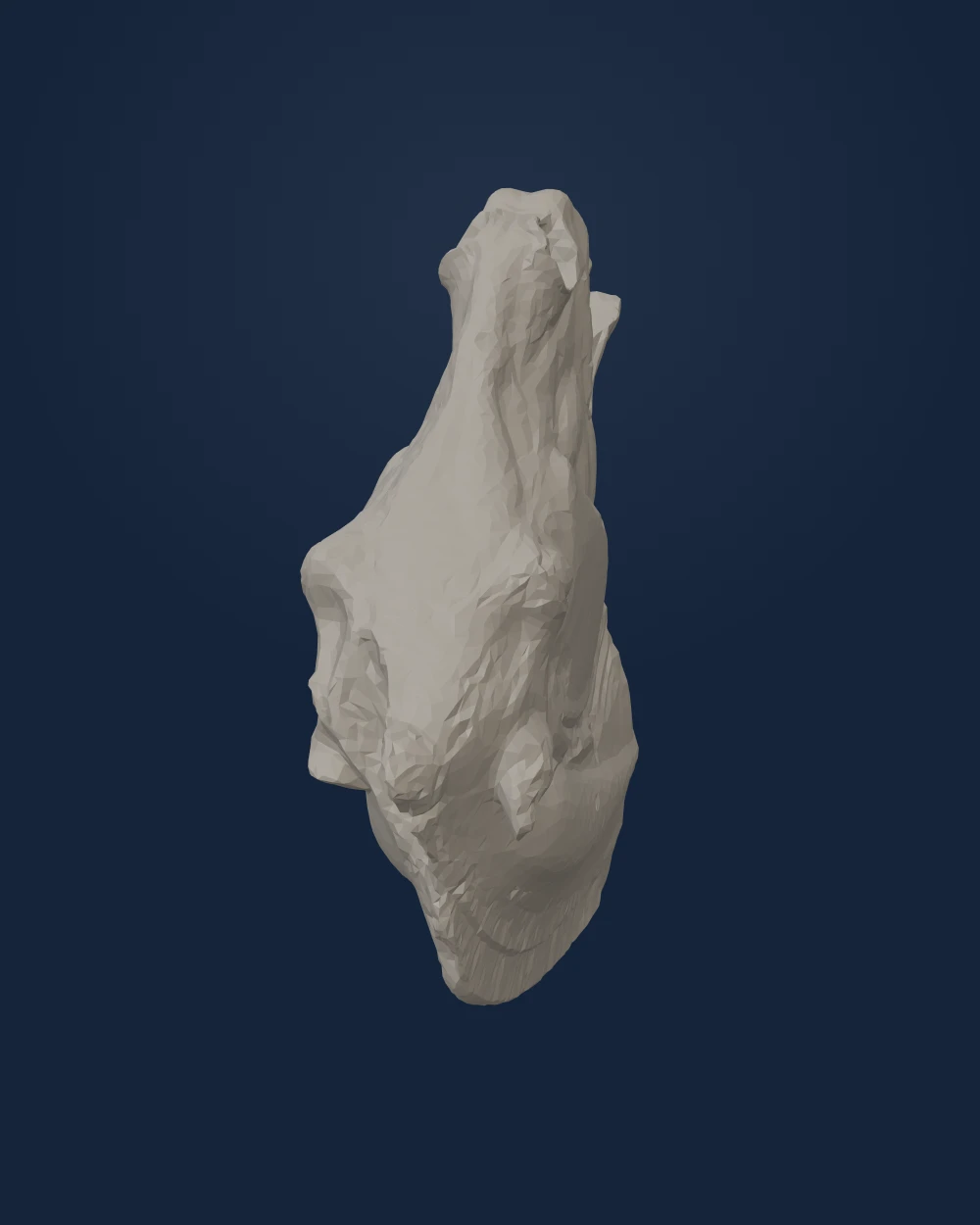
This horse was part of Selene’s moon chariot on the Parthenon’s east pediment. Its bulging eye, flared nostril, and slack jaw were positioned at the lower edge of the composition.
Examine in 3D ↗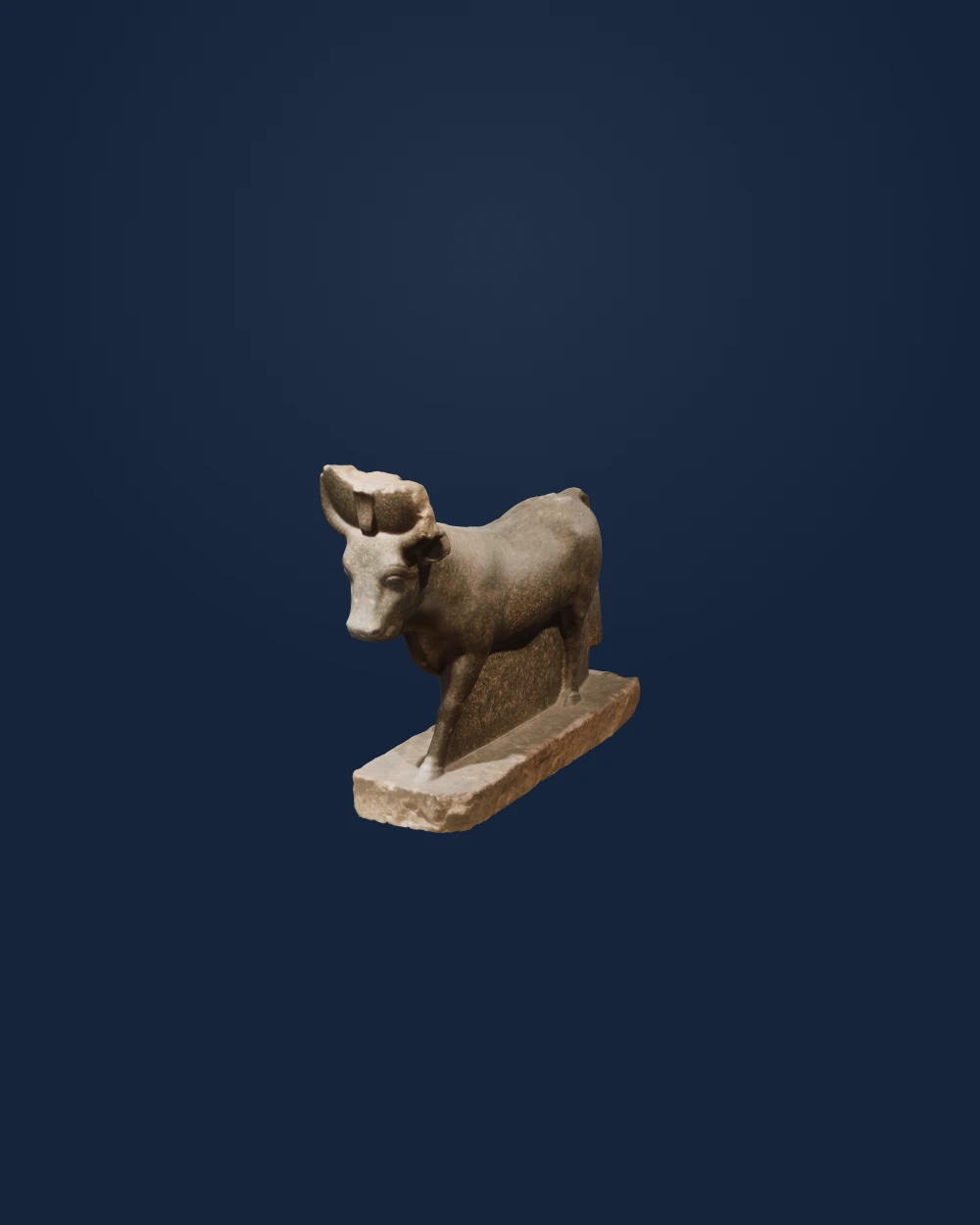
Apis was a living bull selected by priests at Memphis and honored after death. This representation is carved from serpentinite, whose dark surface changes subtly under different lighting.
Examine in 3D ↗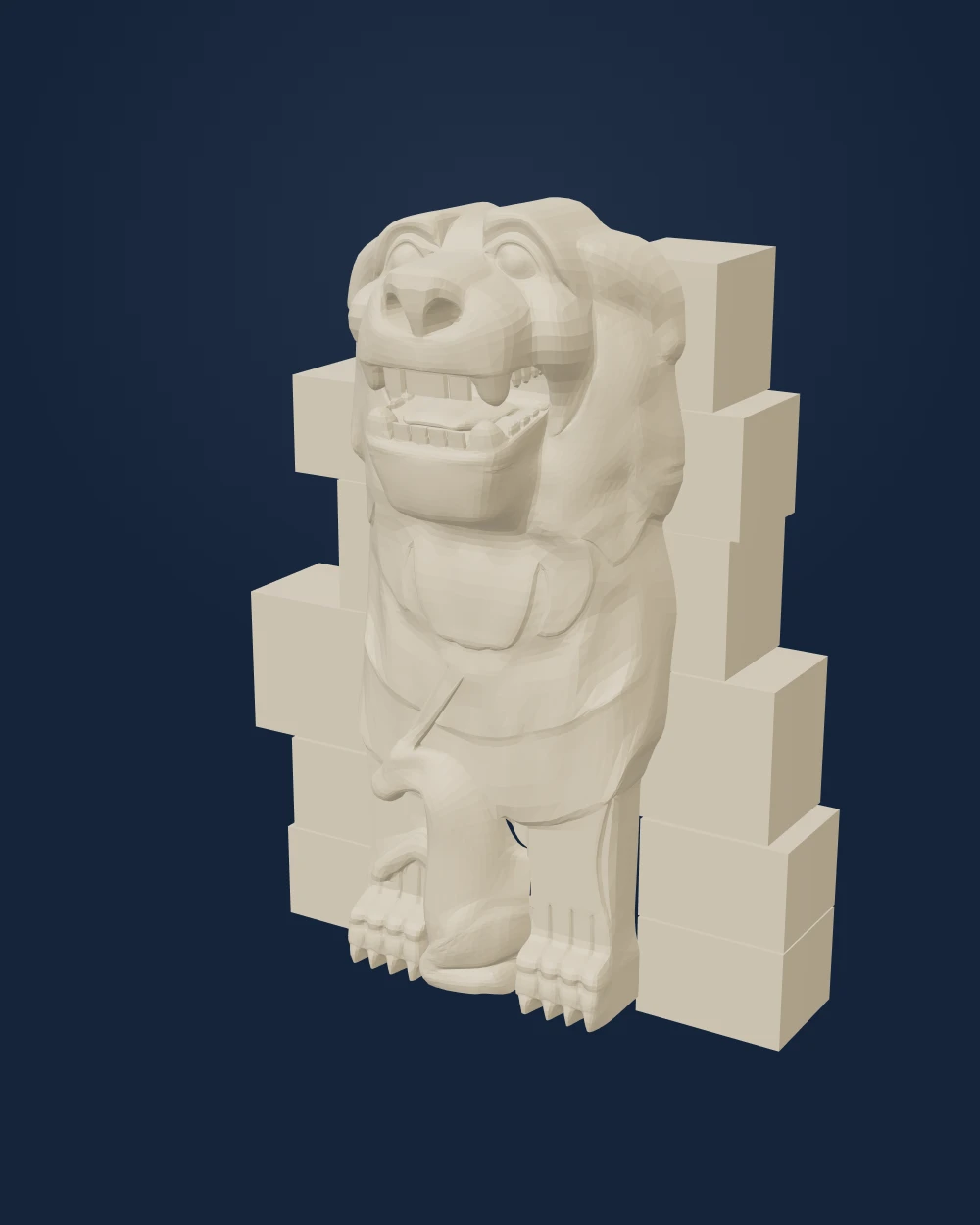
This lion guarded the temple of Al-Lat at Palmyra, sheltering a gazelle between its forepaws. After the limestone work was damaged in 2015, digital documentation supported a reconstruction later that year.
Examine in 3D ↗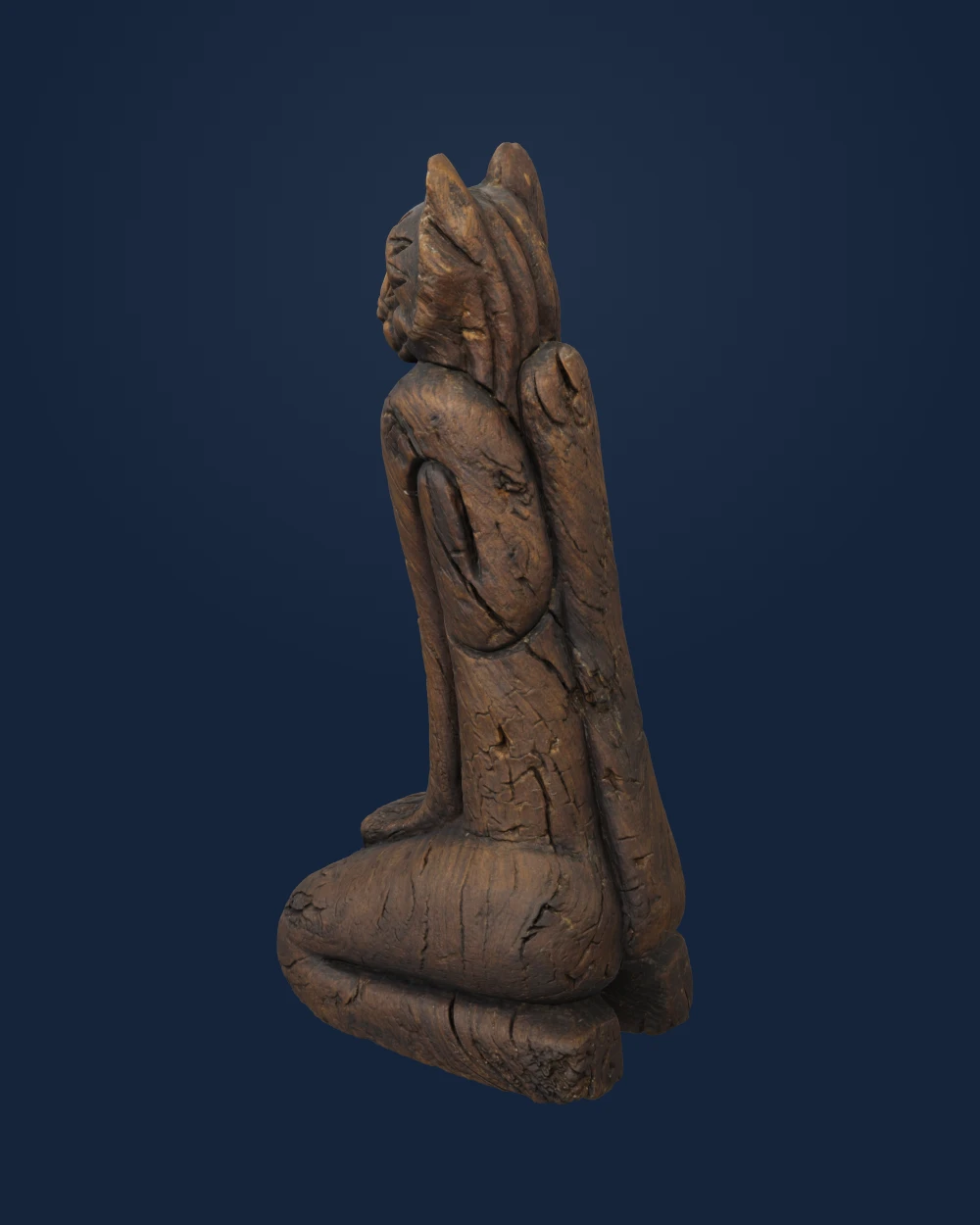
This small Florida wood carving combines human and panther features. Its survival is notable because wood rarely endures for long periods; the carved details remain visible across the surface.
Examine in 3D ↗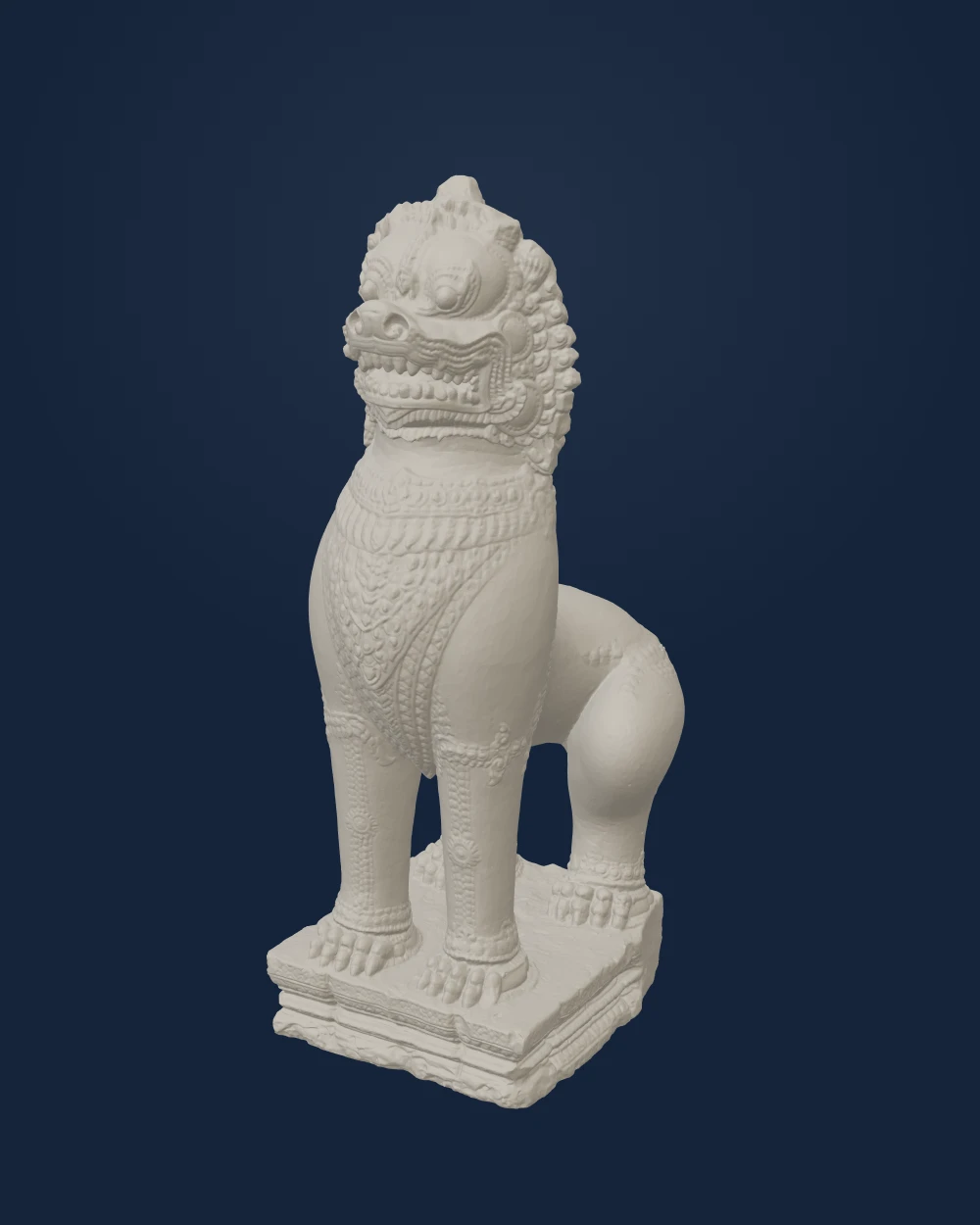
This guardian lion from the Bayon at Angkor is built with a squared chest, fixed haunches, and a flattened face. Its placement suggests that it was intended to be encountered while moving past it.
Examine in 3D ↗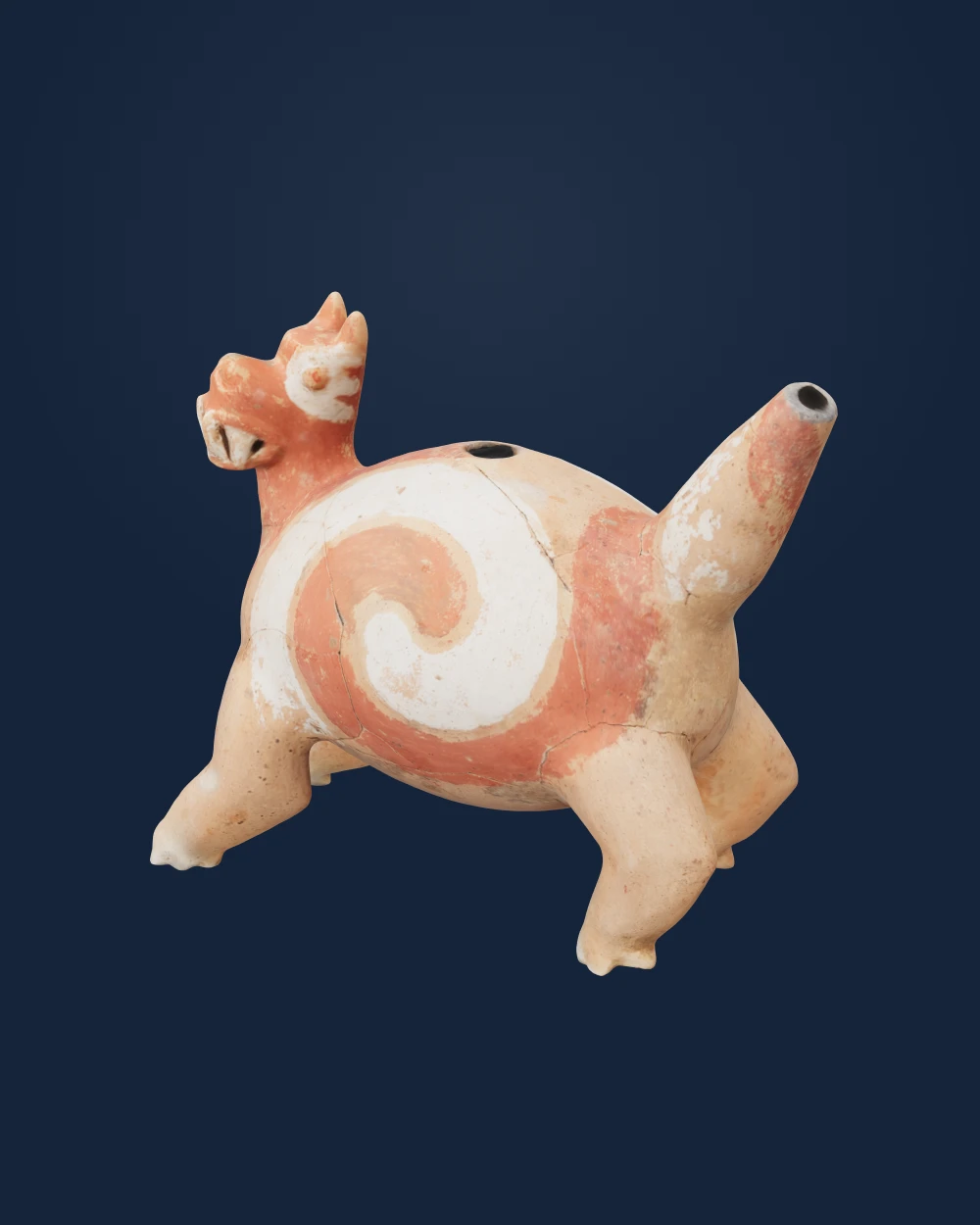
This Quapaw vessel represents the Underwater Panther, a being associated with rivers in Mississippian belief. Made around 1500 in clay and pigment, it combines animal imagery with a container for water.
Examine in 3D ↗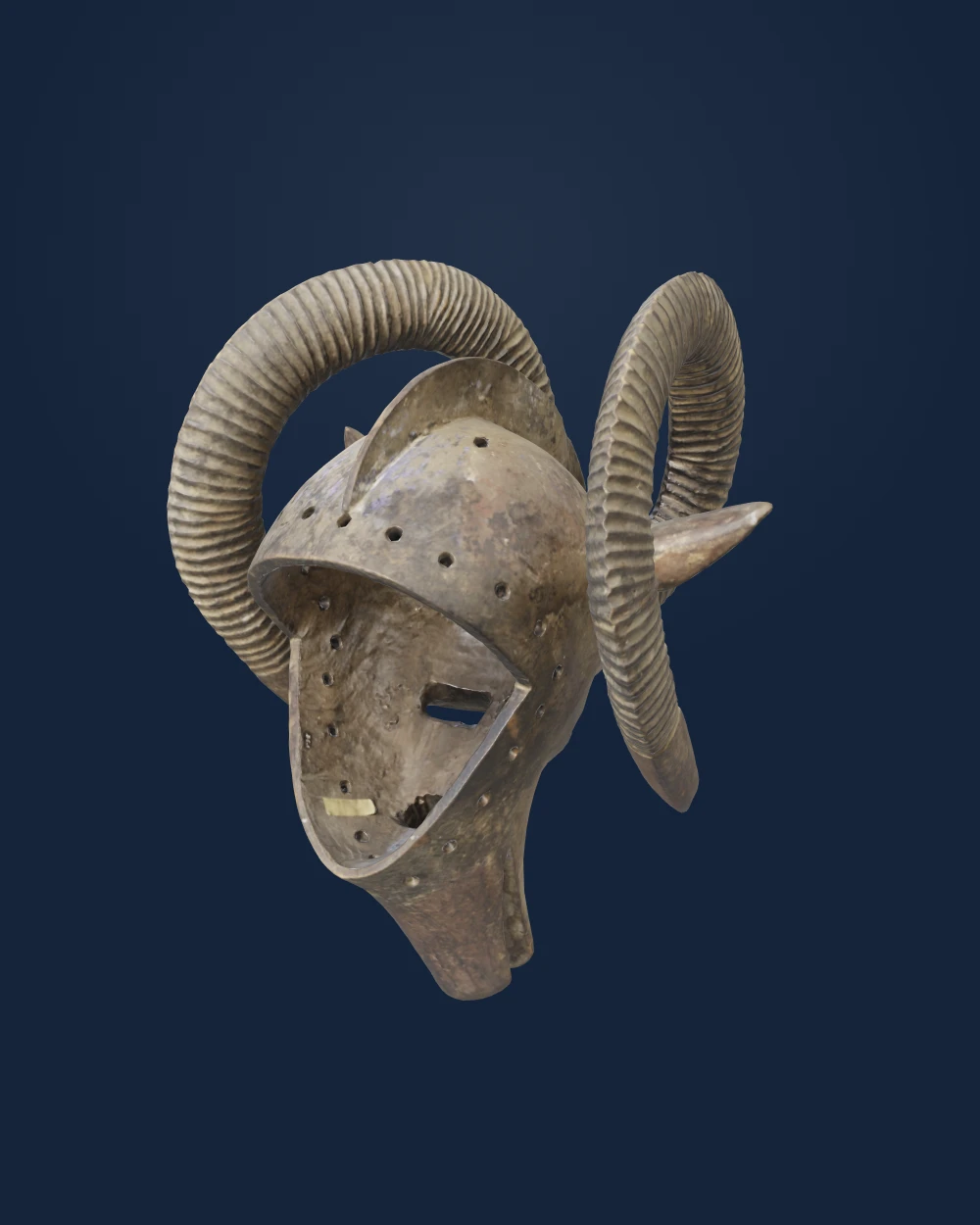
This ram mask was made to be worn. The curled horns sit above openings for a dancer’s eyes; the underside shows the fitting that once rested on a moving human head.
Examine in 3D ↗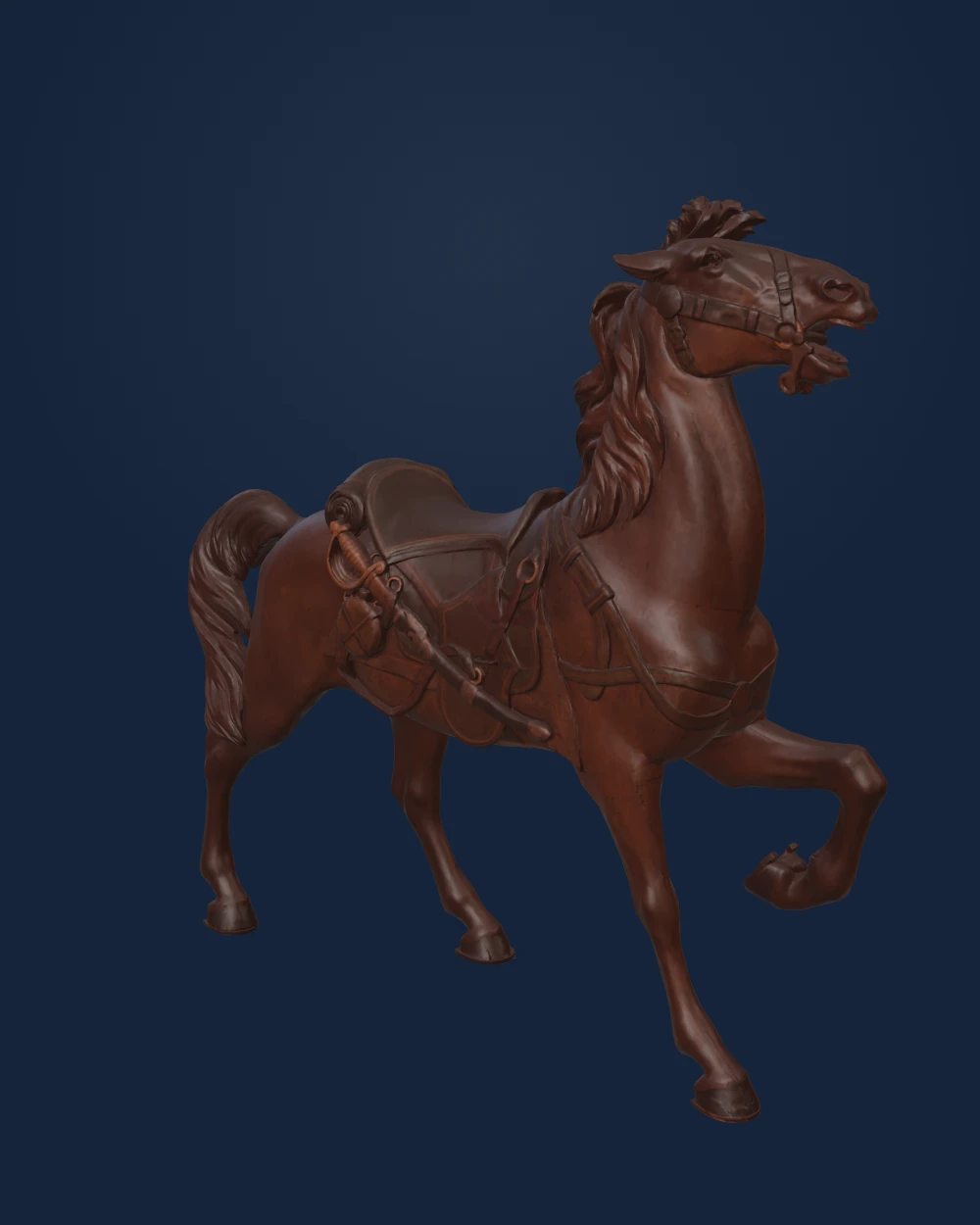
This carousel horse, made around 1917 from basswood, paint, glass, and steel, was designed to carry a rider. As an outside-row horse, one side faced spectators and received more decorative attention.
Examine in 3D ↗